South Africa4.8/5 (4 reviews)
Big 5 wildlife conservation
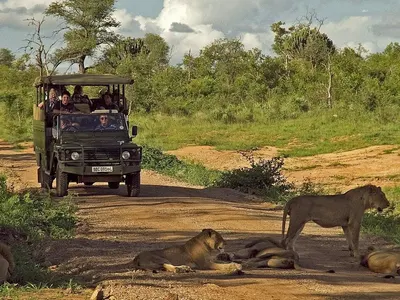
Learn the skills needed to manage an African game reserve, from tracking and anti-poaching to wildlife monitoring, with hands-on encounters with the Big Five.
- Where
- South Africa
- Length
- From 2 to 12 weeks
- Minimum age
- 18 years old
- Language
- English intermediate
- Departures
- Every Sunday
from €2,164 for 2 weeks
Check availabilityFree and with no commitment: the team calls you back with availability. Talk to the team
€300 deposit today, place confirmed within 48 hours, balance before departure.
How does it work?
- Today€300 deposit per participant, deducted from the price
- Within 48 hoursThe team confirms your place, or refunds you in full
- The balance12 weeks before departure, or on confirmation if you leave sooner


 Secure payment by Stripe
Key questions answered
- How old do I need to be?
- The programme is open to volunteers aged 18 and over.
- How long can I go for?
- From 2 to 12 weeks. Departures: every Sunday.
- How much does it cost?
- From €2,164 for 2 weeks.
- What will I do there?
- The local wildlife manager and conservationist’s passion for conservation and education led to the birth of this project.
- Where will I stay?
- Volunteers stay in a big house with a large front porch and wooden floors and ceilings. There is a cosy kitchen where breakfast is served in a help-yourself style.
- What is included in the price?
- 1 night in Johannesburg (airport pick up), accommodation, three meals a day, local transport, 24 hour support and supervision, donation to the project.
- Do I need to speak another language?
- Required level: English intermediate.
The project
The local wildlife manager and conservationist’s passion for conservation and education led to the birth of this project.
Volunteers will be instructed and guided in many of the disciplines necessary to managing an African game reserve. Specific focus is placed on managing the wildlife, conservation, and reserve maintenance, the cheetah breeding research, elephant care and all research projects. Volunteers will also engage in night time and dawn/dusk activities, research, monitoring and patrolling.
This course has been designed to offer participants an incomparable volunteer experience, with practical knowledge and hands-on encounters with Africa’s world-famous “Big Five”, as well as a multitude of other wild animals.
Wildlife Preservation Volunteer Tasks
Volunteers will receive training throughout the course on the following:
Theoretical training
- Animal immobilisation: drugs, methods and equipment
- Tracking: the basics of animal tracking
- Bird, insect and plant identification: volunteers will learn to identify the different types of birds, insects, fauna and flora
- Wildlife management: learn all the facets of managing a Big 5 game reserve.
- Anti-poaching
Practical training
- Approaching game on foot: learn how to safely approach animals on foot, while being conscious of their comfort zones
- Tracking: the practical basics
- Survival camp: learn how to survive in the wild
- Understanding the enclosure structure and the upkeep and improvement thereof
A project we follow
Projects chosen with care and followed through regular visits on site.
A typical week
Monday
Project start day. Trip into town to pick up the volunteers and restock supplies.
Tuesday
Early morning departure for a fixed-route drive as part of the game count programme, which aims to determine game populations in general. In the afternoon, head out on a monitoring safari to locate one of the project’s key species: lion, elephant, leopard or hyena.
Wednesday
Waterhole monitoring in the morning to determine how the species use the area. In the afternoon, you will drive to the breeding boma to monitor buffalo, Livingstone’s eland and nyala.
Thursday
Habitat work: you might be involved in removing alien plants, erosion control or bush clearing. In the afternoon or evening, head out for hyena monitoring and a night patrol.
Friday
Early in the morning, set off in search of elephants as part of the ongoing research on the elephant contraception programme. In the afternoon, head out to monitor bird species before sleeping under the stars with the “Endangered Species” project.
Saturday
Either an outing is planned, or it is a free day when volunteers can relax or go on an excursion. When you have free time, staying at the camp is not recommended as the rangers are off duty.
Sunday
Habitat work in the morning, followed by a monitoring walk in the afternoon focusing on the lion population. Back in the evening, you can head to the local pub or share a typical South African braai (barbecue).
Between activities, volunteers will receive a series of presentations on the project’s work, on how to approach dangerous game on foot, or even on rhino poaching. This time will also be used to transfer all the collected data onto the computers, compile the weekly research report and help check and clean the vehicles.
Please note that, from time to time, unavoidable changes may be made to the projects. These changes may be caused by weather conditions, conservation priorities, the supply of materials, or because ongoing projects have progressed faster or more slowly than expected. We ask you to accept these changes (we are sure you will enjoy the replacement projects just as much!). This routine is followed as closely as possible; however, working with animals requires a flexible schedule.
Accommodation and meals
Volunteers stay in a big house with a large front porch and wooden floors and ceilings. There is a cosy kitchen where breakfast is served in a help-yourself style. Lunch is usually served outside in the communal braai area or packed to have in the reserve. Dinner is either in the warm kitchen or outside at the fire. There are 3 large rooms in the house that have 4 beds each. These rooms share 2 full bathrooms and an extra outside shower. There is also a cottage about 15m away from the main house where volunteers may also be placed. This cottage has a small kitchen, one bedroom with 4 beds and a full bathroom with a shower. From the garden, you can see sable antelope, giraffe, wildebeest and other antelope species, and the sound of zebra is carried by the wind.
Budget
How long are you going for?
Starts every Sunday in Johannesburg
What is included
- 1 night in Johannesburg (airport pick up)
- Accommodation
- Three meals a day
- Local transport
- 24 hour support and supervision
- Donation to the project
Not included
- Flights
- Insurance
Where your money goes
Donations are reinvested in full and directly into the local associations. How the costs break down
See the budget week by week
| Length | Total programme budget |
|---|

Responsible travel by Freepackers
Why not take your time?
Extend your trip in South Africa
No volunteering here: a tour with local guides, at your own pace. The team arranges it with your stay, in the same enquiry.
All 4 tours in South AfricaYou can add it when you fill in your enquiry.
Getting ready to leave
Your application
An up-to-date CV and a cover letter describing your background and what brings you here.
Conditions to take part
- From 18 years old.
- Intermediate / fluent English level (understand instructions, able to communicate).
- A copy of your passport.
Insurance
For any project abroad, Freepackers requires travel insurance covering accidents, illness, repatriation and third-party liability. With Chapka Cap Student, you get 5% off.
Online language lessons
With Clic Campus: video lessons and an e-learning platform, from home.
Questions
Can you touch or get close to the animals?
In most cases contact with the animals is limited, because their welfare comes first. The aim is not direct contact but supporting the local team with the work that matters (maintaining the enclosures, preparing food, cleaning, and sometimes helping with care, depending on the setting and its rules).
These rules also exist to keep volunteers and animals safe.
How does Freepackers select its projects?
We look for reliable local partners, work that is genuinely useful, a safe setting and serious support. The aim: an experience that is positive for you, and above all respectful and beneficial for the communities and the environment. Read more about how we select projects.
What is a humanitarian trip?
A humanitarian, solidarity based trip is a way of travelling the world while contributing actively to a project with a local community, ethically and respectfully. It pushes you to meet people where they live, share their daily life and support local initiatives.
Another question? Ask the team, and someone who knows the project will answer.
In South Africa too
All our programmes in South Africa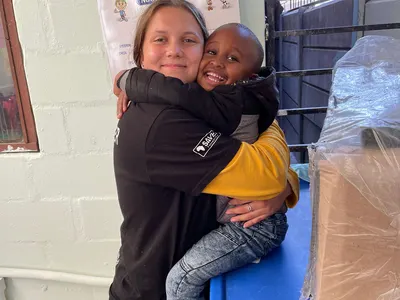
South Africa, Cape Town4.7(6)
School support and childcare in Cape Town
- Duration
- 2 to 12 weeks
- Age
- From 15 years old
from €914 for 2 weeks
South Africa, Johannesburg5(4)
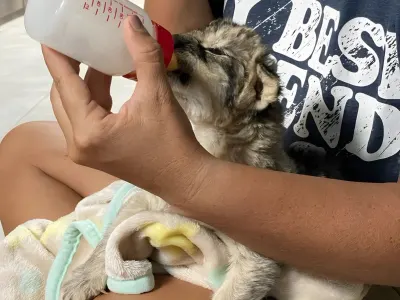
Volunteer in a wildlife rescue farm
- Duration
- 2 to 12 weeks
- Age
- From 16 years old
from €2,112 for 2 weeks
South Africa, Johannesburg5(1)
Community project in South Africa
- Duration
- 2 to 10 weeks
- Age
- From 16 years old
from €2,090 for 2 weeks
