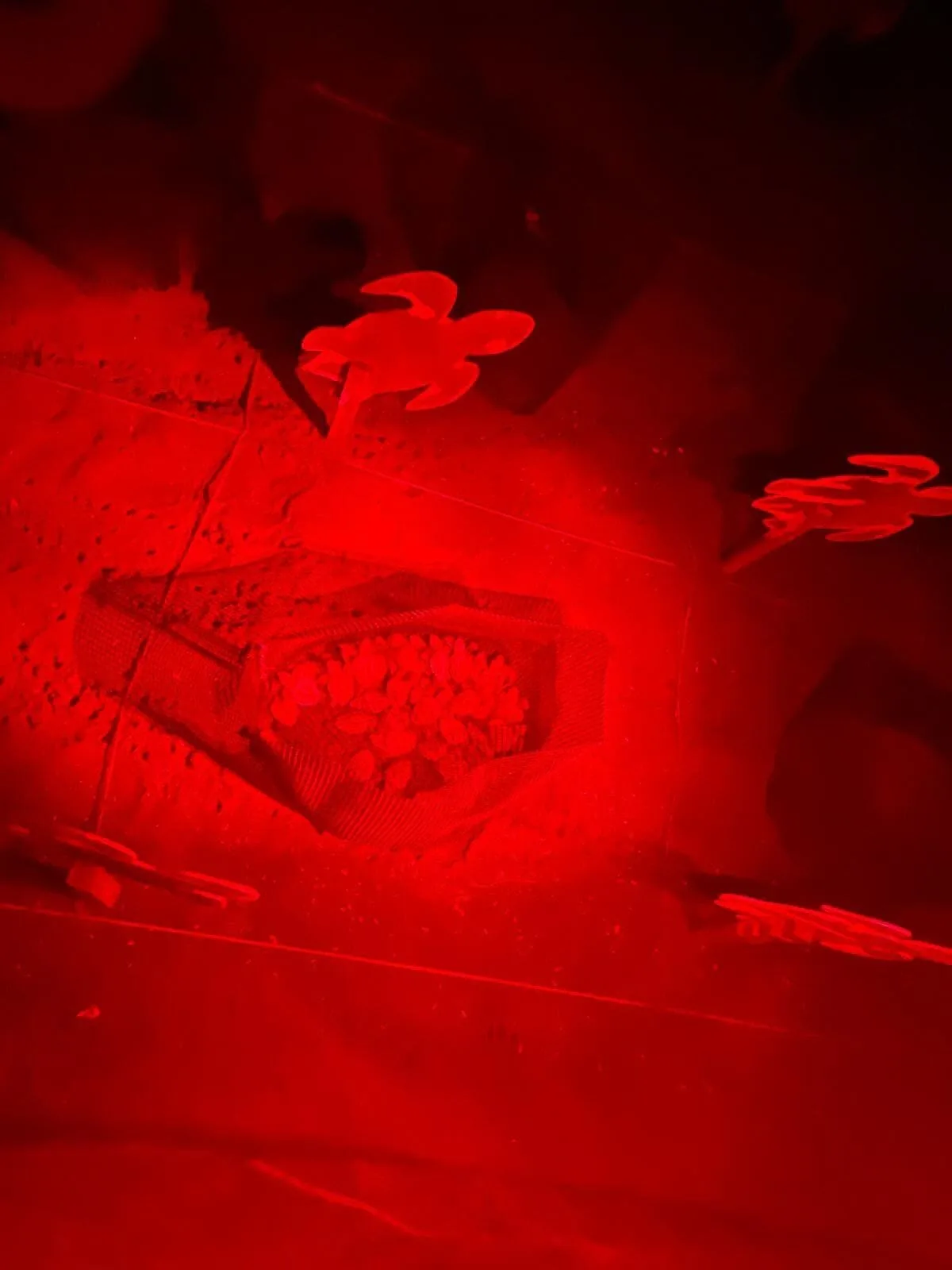
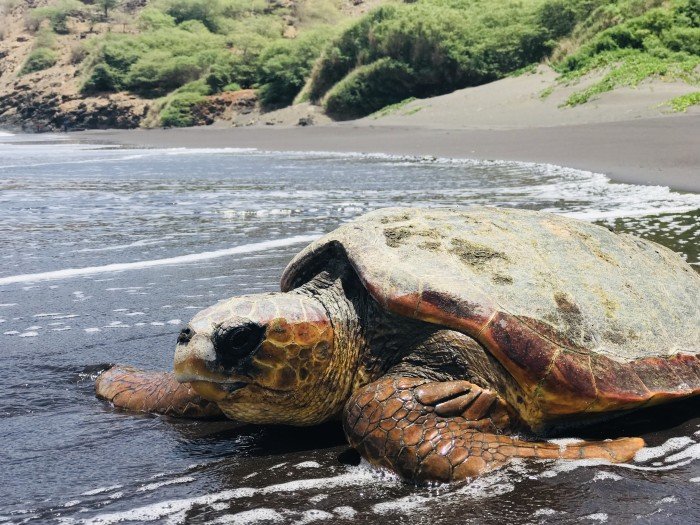
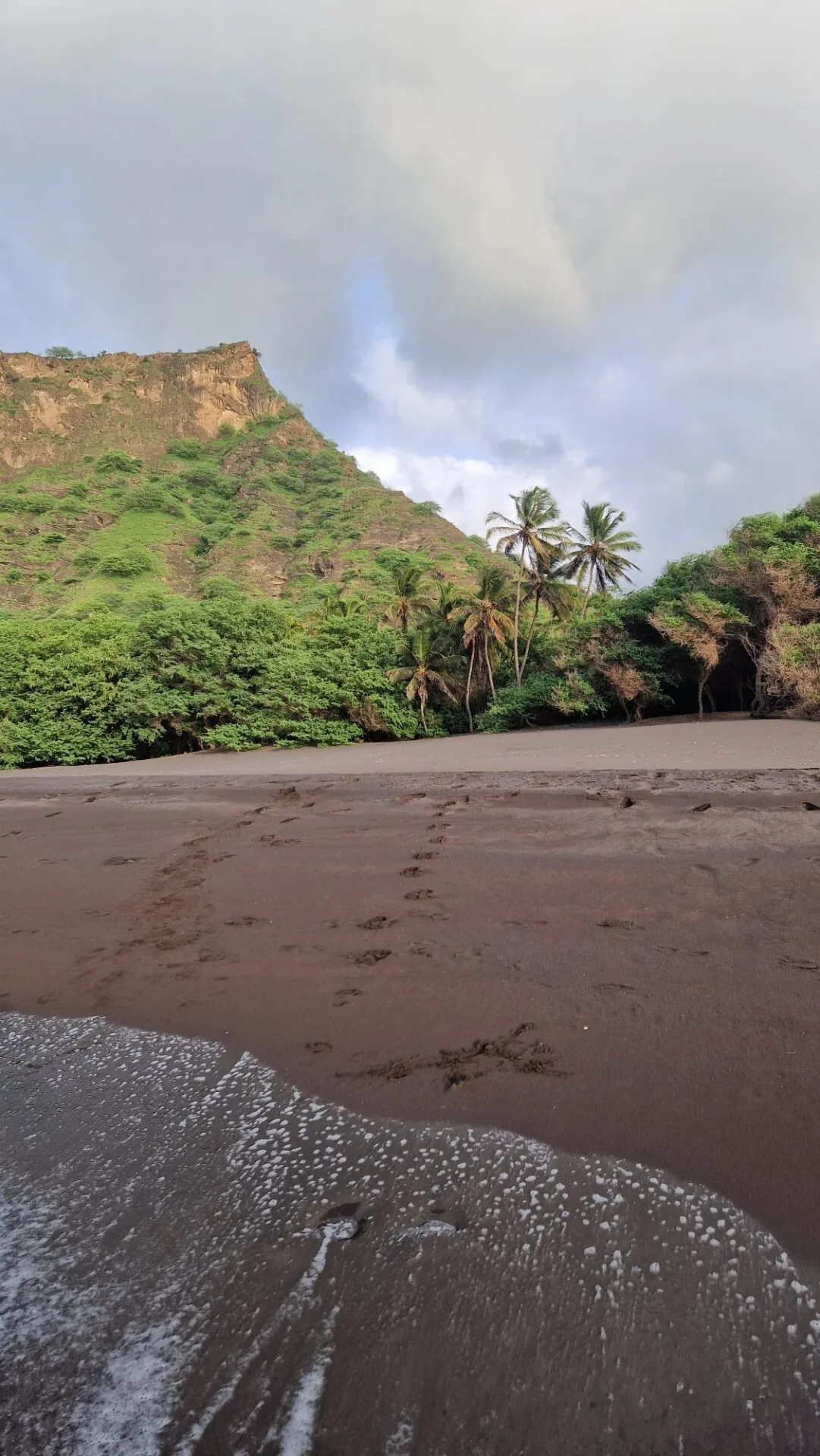
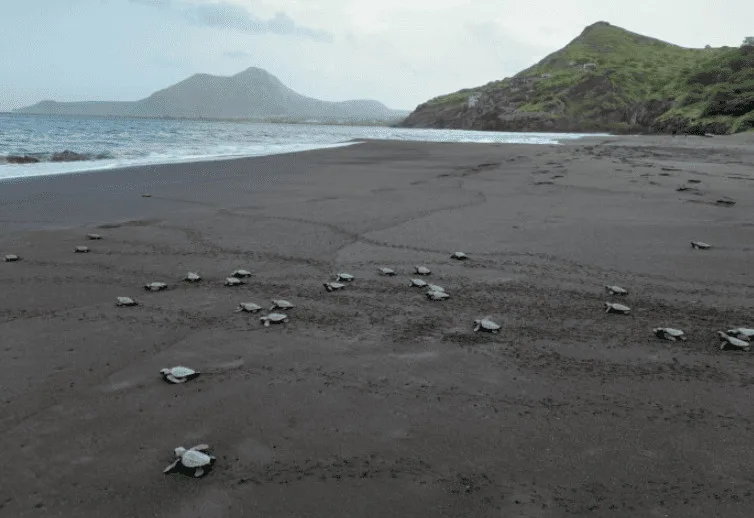
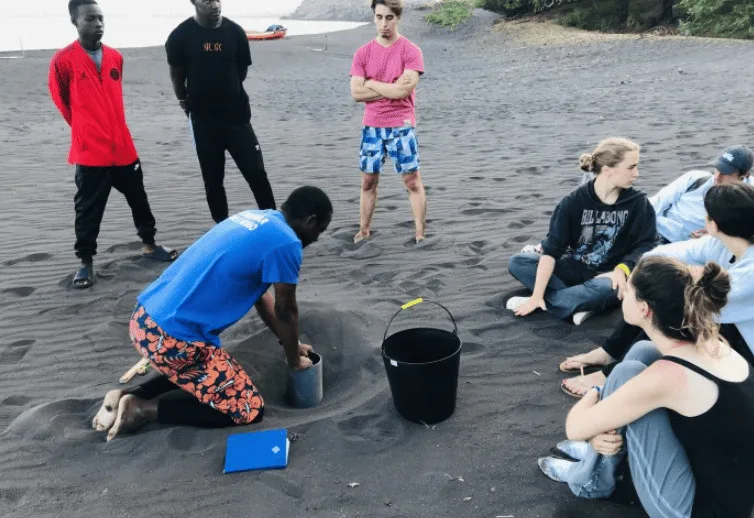
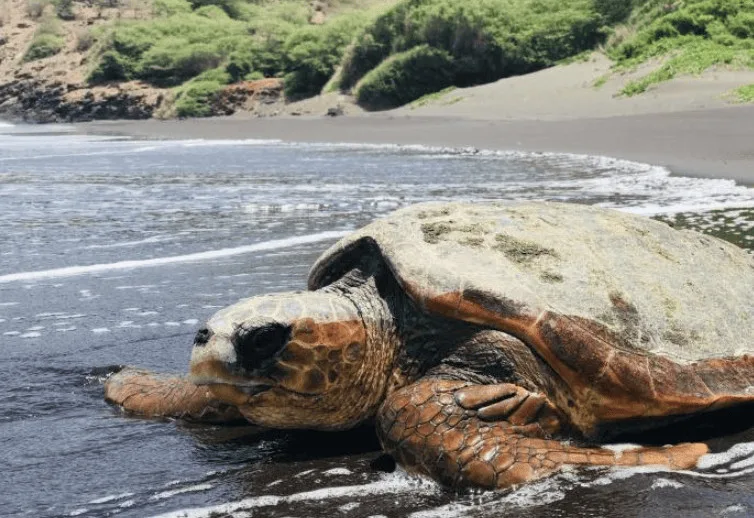
The beaches of Cape Verde are major nesting sites for loggerhead turtles, making them an ideal destination for responsible tourism.
Loggerhead turtles help maintain the health of seagrass beds and coral reefs, which serve as vital food sources and shelters for a wide variety of marine species.
In addition to studying local biodiversity, participants also help identify threats to the species’ survival — such as coastal development, which disrupts nesting and egg-laying.
The beach is located 15 minutes away by car (transport included).
Tasks and schedule:
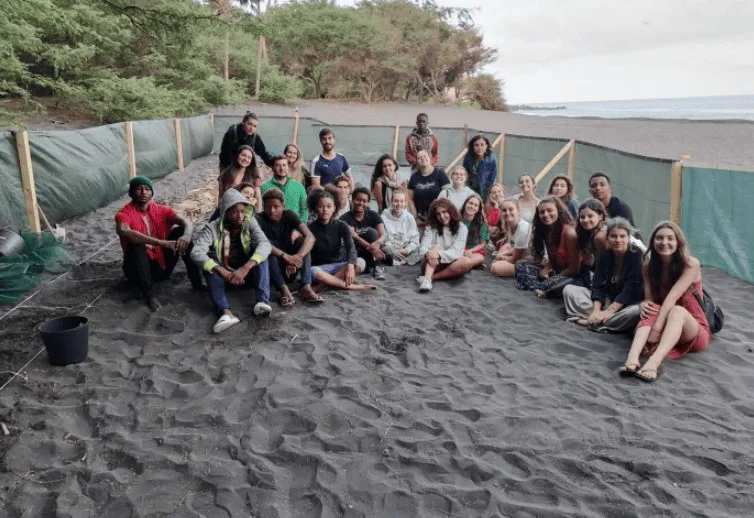
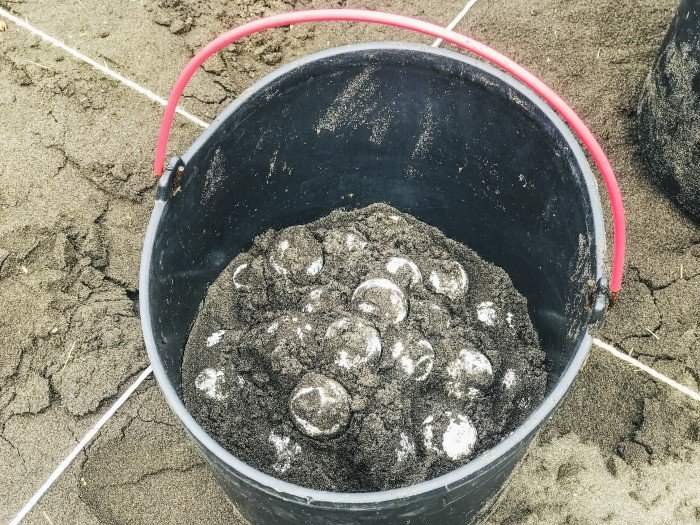
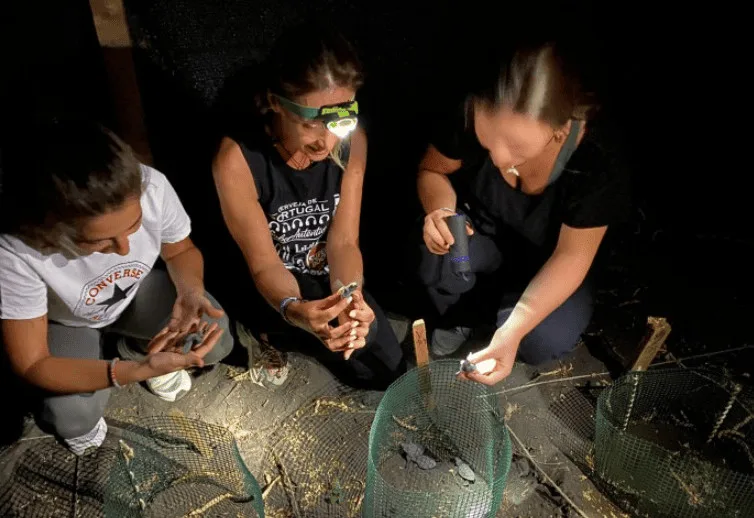
Volunteers take part in various missions led by local coordinators, with the main goal of protecting turtles and their nests.
Working hours: 8:00 p.m. – 7:00 a.m.
Equipment and tips: sleeping bag, headlamp, warm and waterproof clothing.
The work is carried out by both local assistants and volunteers. While the project includes a range of activities, turtle and nest protection remains the main focus of this responsible tourism program.
Duration in weeks | Total mission budget |
|---|---|
2 weeks | 1290 € |
4 weeks | 2230 € |
6 weeks | 3170 € |
8 weeks | 4160 € |
10 weeks | 5200 € |
12 weeks | 6240 € |
You’ll stay in a volunteer house with shared bedrooms and bathrooms (non-mixed).
The house is located about a 10-minute walk from both the school and the beach.
Both volunteer houses are equipped with Wi-Fi.
Meals
Meals are included — three per day on weekdays and two per day on weekends. You’ll have the opportunity to enjoy local dishes prepared with good vibes at the volunteer house (local style).
Vegetarian, gluten-free, and lactose-free meals are also available upon request.
Local Life
There are plenty of activities to enjoy around the island, such as:
– Snorkeling
– Jet Ski
– Camping
– Hiking and trekking
– Restaurants and bars
– Sports activities such as yoga or volleyball
(Please plan a separate budget for these optional activities.)
At least five days before your arrival in Cape Verde, you must pre-register on the official government platform at www.ease.gov.cv. An airport security tax will need to be paid. It is recommended to keep proof of payment for this tax, as you may be asked to present it upon arrival in Cape Verde.
For any international project, Freepackers requires travel insurance covering accidents, illness and repatriation, including civil liability for professional activities abroad.
For full protection while studying or interning abroad, you can take out Cap Student insurance online via this link Student insurance abroad | Chapka Assurances, which gives you a 5% discount.
If you choose another insurance provider, we will ask you to send us a copy of your insurance certificate in English.
Reach the language level your international project requires with tailored support. The Clic-campus method Free Packers X Clic Campus foreign language courses combines live video lessons with an innovative e-learning platform, fully flexible from home.
Turtle conservation projects are programs that help protect endangered sea turtles and their habitats. Participants may assist with beach cleanups, nesting site monitoring, and hatchling protection, and marine conservation activities.
Our projects are selected to ensure safety. Families benefit from a reassuring environment and supervised activities. The days are designed to include both children and adults, with a flexible pace and shared moments of discovery.
Yes! For families who want to travel together, we offer programs specifically designed to welcome children from 4, 10, or 15 years old, depending on the project. Our program pages indicate whether they are family-friendly, or you can contact our team to learn more.
You’ll stay together in accommodation with private rooms, in shared houses, or in comfortable local hostels.