Kenya5/5 (2 reviews)
Protecting wildlife in Kenya
Help protect giraffes in a Kenyan conservation reserve partnered with WWF: census work, tracking and native tree planting alongside wildlife specialists.
- Where
- Kenya
- Length
- From 2 to 12 weeks
- Minimum age
- 15 years old
- Language
- English intermediate
- Departures
- Every Sunday
from €1,500 for 2 weeks
Check availabilityTalk to the teamNo commitment. Anaëlle, Amélie or Maëlia will reply.
The project
“Family” projects are suitable for children aged 4 and up. Our advisors will provide personalized recommendations based on your children’s age, the destination, and the type of mission.
Kenya is known and recognized for its wildlife that freely roams the savannah, making it an ideal destination for sustainable tourism projects. Wildlife plays a significant role in Kenya’s economy and also at the local level, which explains the significant development of sustainable tourism in the region. In most cases, isolated communities live in proximity to the wildlife. Over time, the development of civilization has caused conflicts between humans and wildlife, leading to the displacement of animals from their natural habitats to allow human activities to prosper. Various organizations have established conservation areas to promote a healthy coexistence between wildlife and local communities. Alongside specialists and local guides, you will be one of the key actors in managing daily activities aimed at protecting the environment.
You will participate in activities such as ecological monitoring, census-taking, tracking, collar placement, and many other tasks. You will be accompanied by a wildlife specialist during your work in the reserve. This specialist will explain your missions and provide training on tools and processes. It is important to note that there is a local community within the reserve. You will have the opportunity to interact with them, which will help you better understand their coexistence with wildlife and their impact on environmental conservation in the context of this sustainable tourism project.
The reserve, which is closed to the public, is located 50 minutes from the accommodation. It is a conservation center for giraffes, in partnership with WWF. Other animals present: leopards, hyenas, zebras, gazelles…
Animal and environmental project. Examples of activities:
- census of giraffes in the reserve
- tracking, observing, and identifying giraffes
- planting native trees and watering them
- removing invasive plants that are harmful to giraffes
All projects take place in the morning from 8 a.m. to 2 p.m. The afternoon is dedicated to cultural and artistic activities or outings (hikes, visits, etc.). It is possible to combine this project with the educational project in Kenya.
A project we follow
Projects chosen with care and followed through regular visits on site.
Accommodation and meals
You will be accommodated in our volunteer house. All participants are expected to respect the environment and use all resources sparingly, especially electricity. There are occasional power cuts during the day, but don’t panic. That’s village life. The water supply is always assured. You’ll have all the essentials at your disposal during your stay.
Meals are provided daily and rooms are cleaned at weekends, but you’ll also be expected to contribute to the tidiness and cleanliness of the accommodation. The volunteer house is located close to Green Steds International School and a few minutes’ walk from the southern entrance to Lake Nakuru National Park. It is about 15 km from Nakuru town.
The atmosphere is warm and friendly: all volunteers stay in a large house with common areas for eating together, relaxing, reading, playing, etc. The house hosts up to 25 volunteers.
Arrival and transfers
Pick-up from Jomo Kenyatta airport (Nairobi) will take place on Sunday before 1 p.m. Precise instructions on times and meeting points will be communicated in the pre-departure guides.
Free time and activities
There are plenty of places to visit in your spare time. For example, you can visit Thompson Falls in Nyahururu, hike the Hyrax Hills, hike Menengai Crater, check out the equator at Gwakung’u, visit Lake Nakuru National Park and Lake Naivasha.
Budget
How long are you going for?
Arrival every Sunday, all year round
What is included
- Orientation meeting
- Airport pick-up and transfer from Jomo Kenyatta (Nairobi)
- Donation to the project
- English-speaking coordinator
- All meals
- Accommodation in dorm rooms
- Wifi
Not included
- International flights
- Travel and repatriation insurance
- Visa
- Return transfer to the airport
Where your money goes
Donations are reinvested in full and directly into the local associations. How the costs break down
See the budget week by week
| Length | Total programme budget |
|---|
Getting ready to leave
Your application
An up-to-date CV and a cover letter describing your background and what brings you here.
Conditions to take part
- From 15 years old to travel alone; in a family, children take part accompanied by their parents.
- Intermediate level of English (able to understand instructions and communicate).
- Copy of passport.
Insurance
For any project abroad, Freepackers requires travel insurance covering accidents, illness, repatriation and third-party liability. With Chapka Cap Student, you get 5% off.
Online language lessons
With Clic Campus: video lessons and an e-learning platform, from home.
Questions
What kind of accommodation is provided for a family?
You stay together, in private rooms, shared houses or comfortable local guesthouses.
Is it a safe trip for children?
Our projects are selected with safety in mind. Families get a reassuring setting and supervised activities. The days are designed to include young and old alike, with a flexible pace and time to discover things together.
Can you join a project as a family?
Yes. For families who want to travel together, we offer programmes designed to welcome children from the age of 4, 10 or 15 depending on the project. Our programme pages say whether they are open to families; otherwise, contact our team to find out more.
Another question? Ask the team, and someone who knows the project will answer.
In Kenya too
All our programmes in Kenya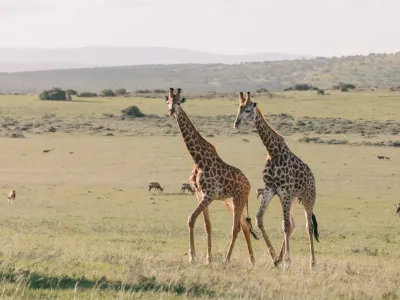
Kenya, Nakuru
Summer camp: educational project and giraffe conservation in Kenya
- Duration
- 2 weeks
- Age
- From 15 years old
from €1,400 for 2 weeks
Kenya5(2)
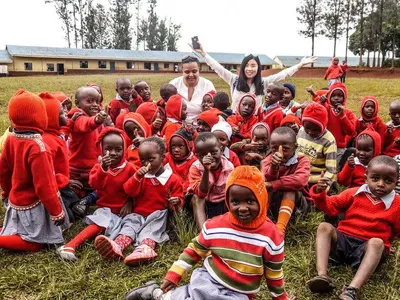
Education project in Kenya
- Duration
- 2 to 12 weeks
- Age
- From 15 years old
from €1,050 for 2 weeks
Kenya, Nakuru
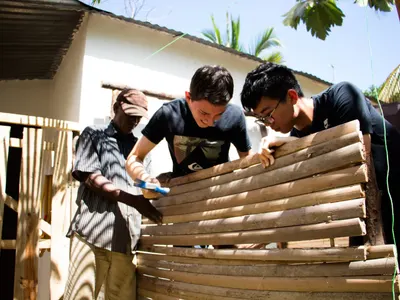
Construction project in Kenya
- Duration
- 2 to 12 weeks
- Age
- From 15 years old
from €1,050 for 2 weeks
