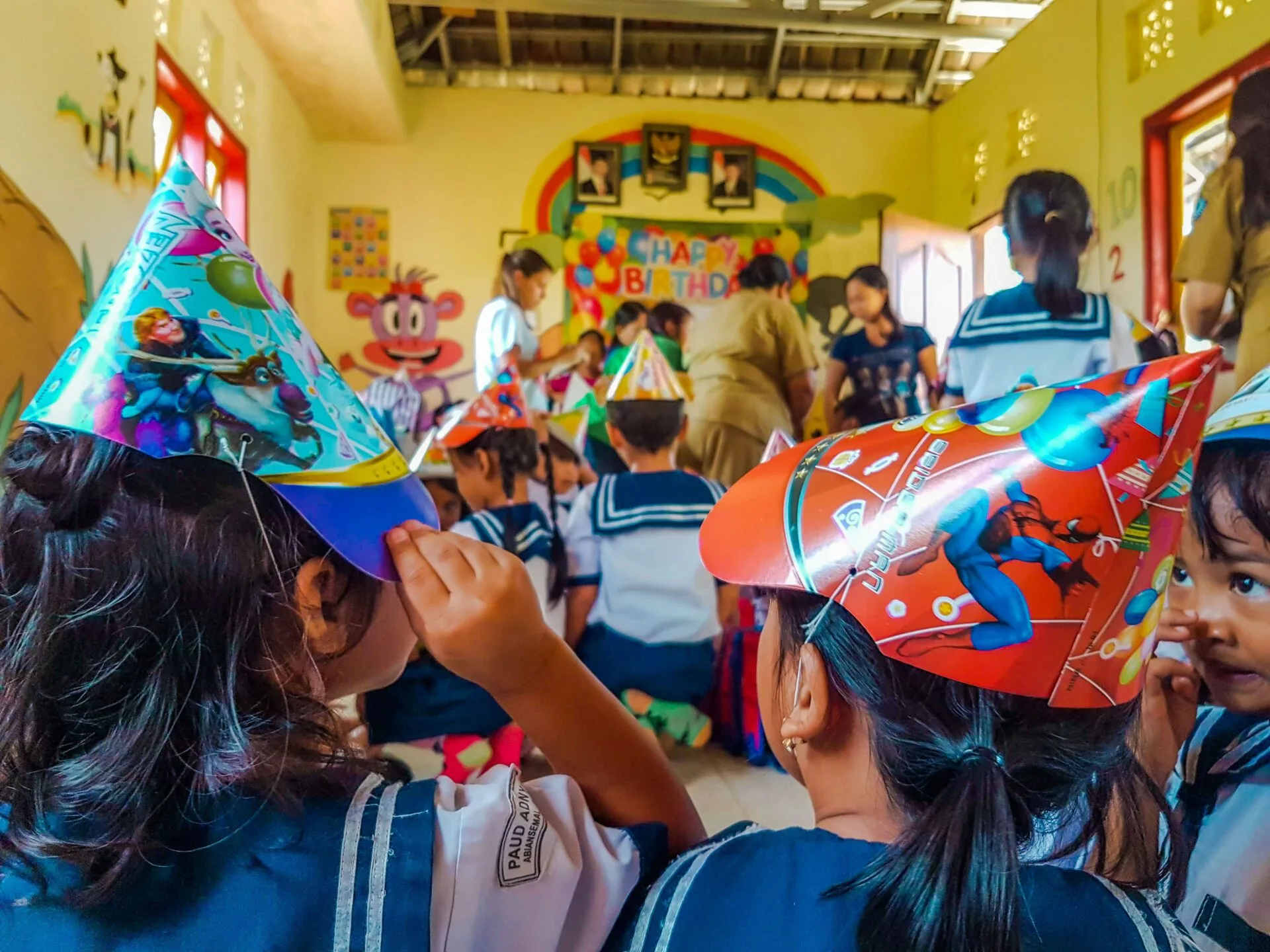
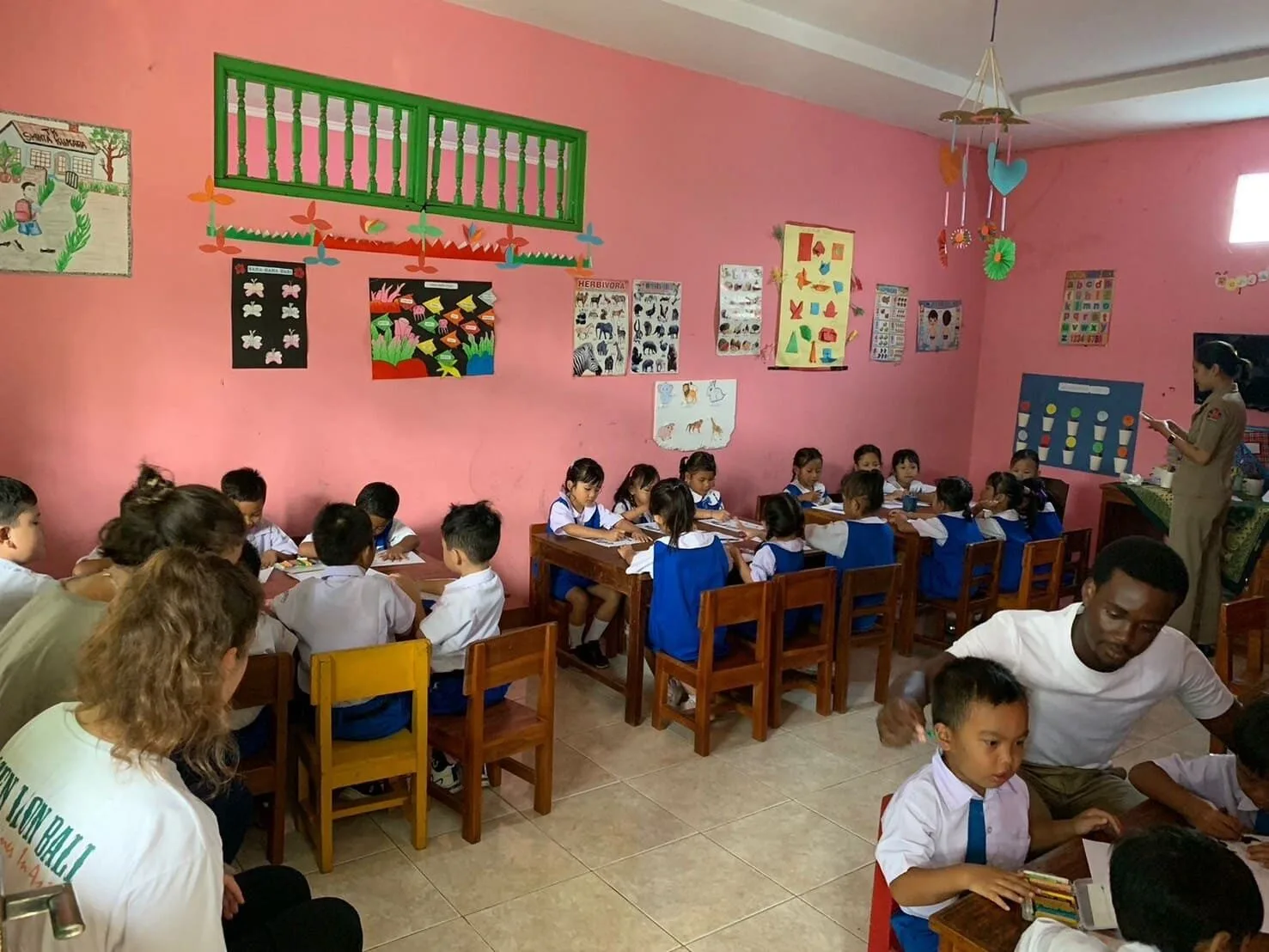
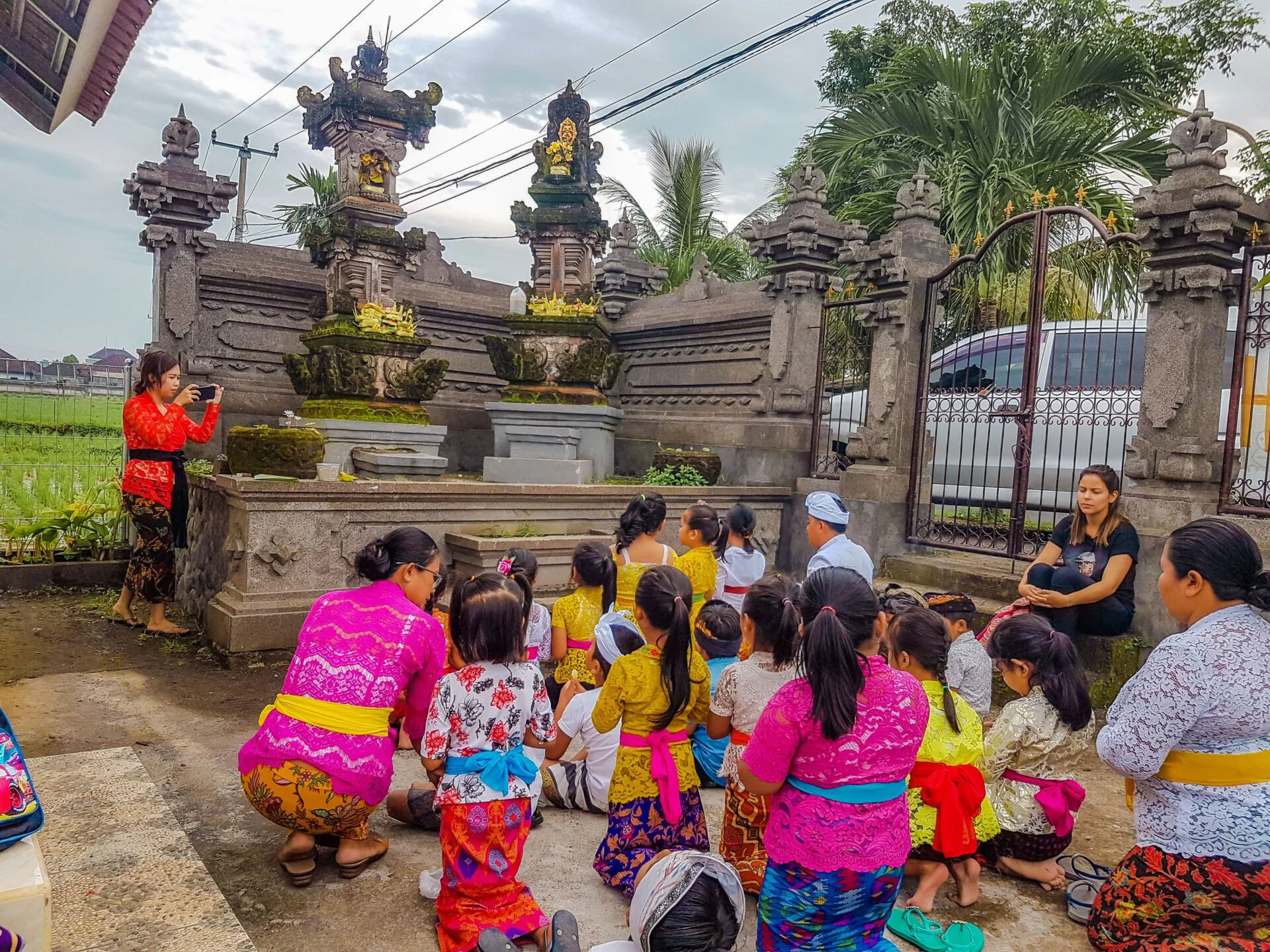
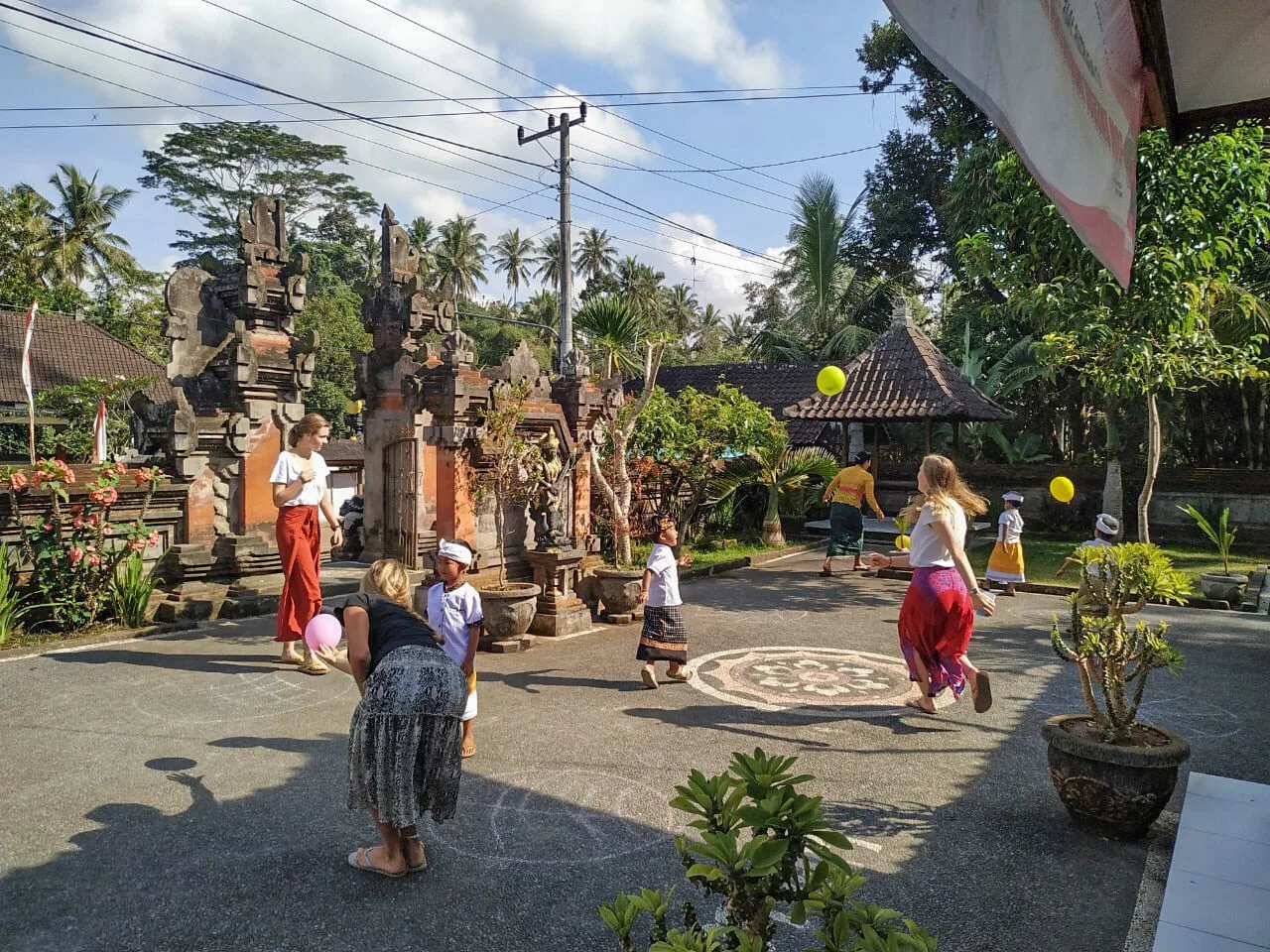
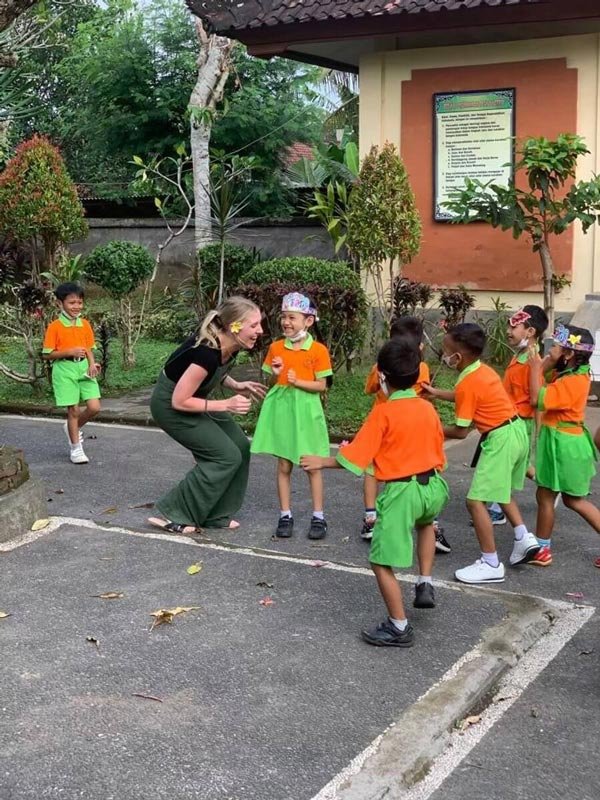
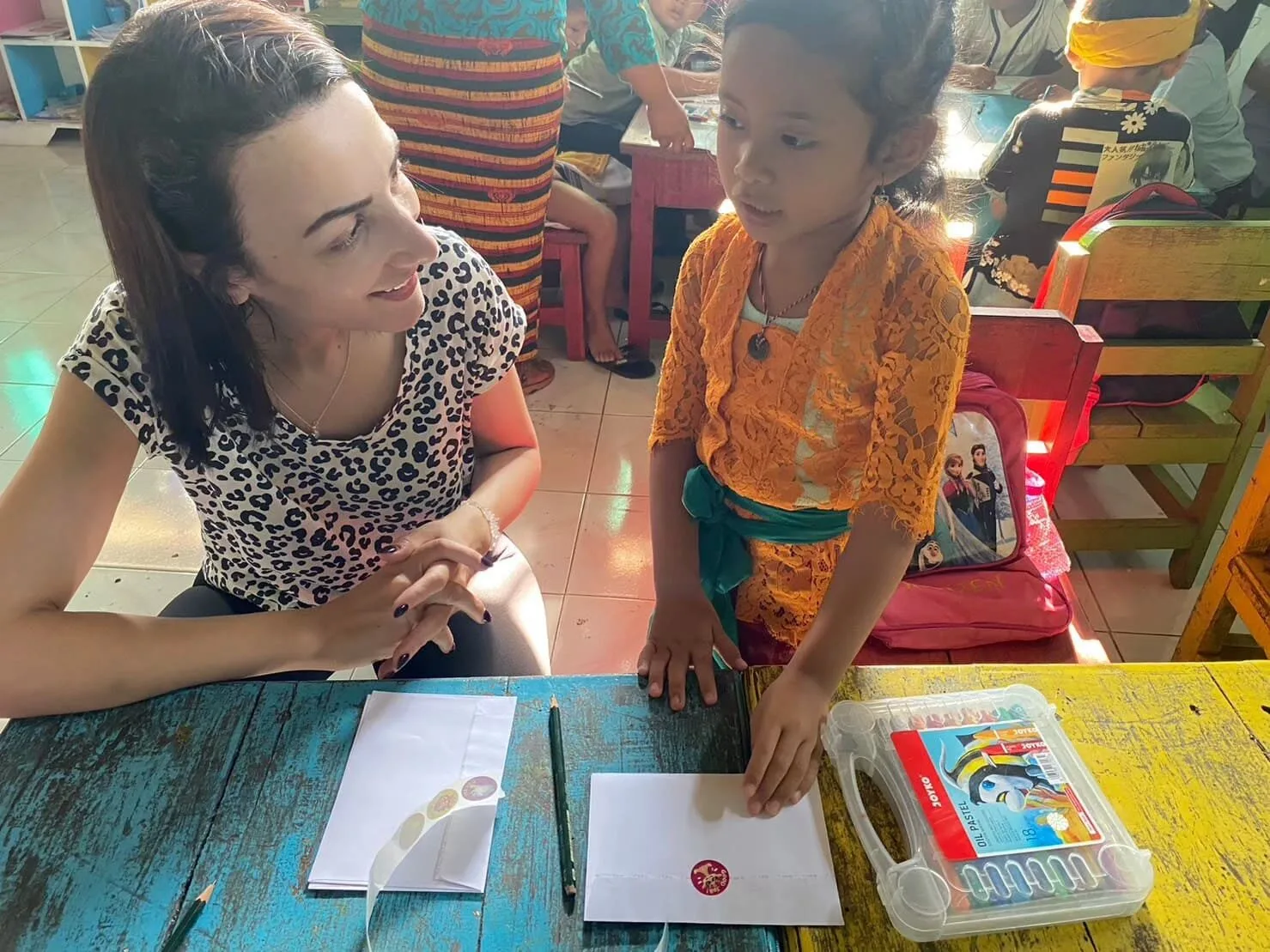
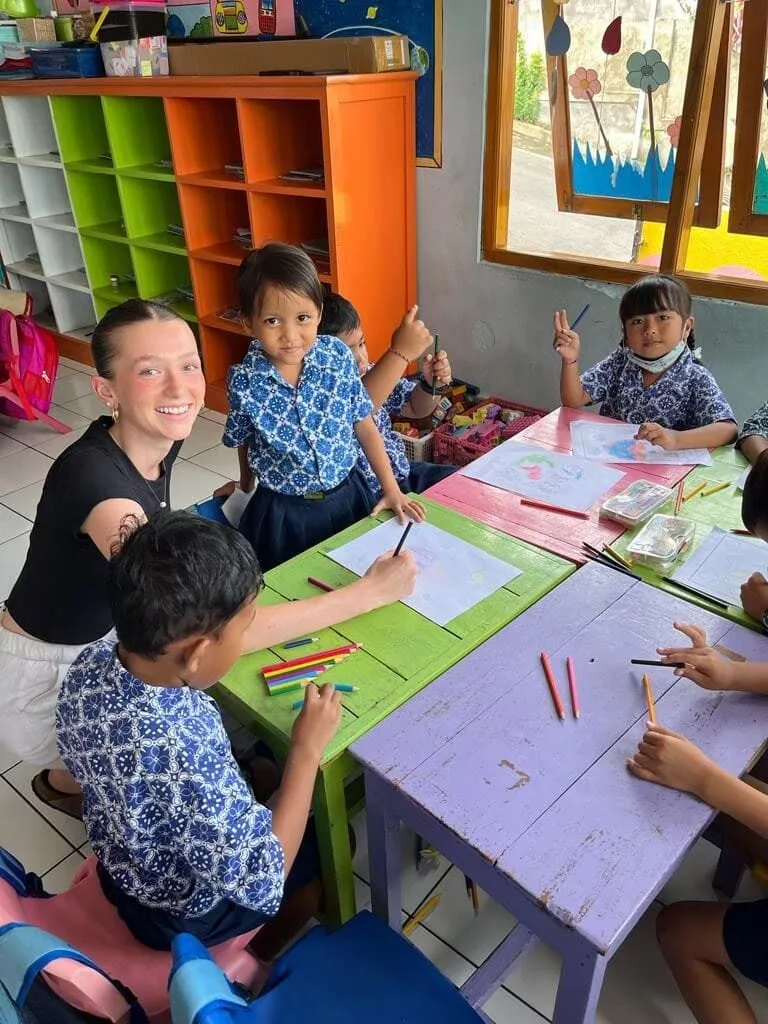
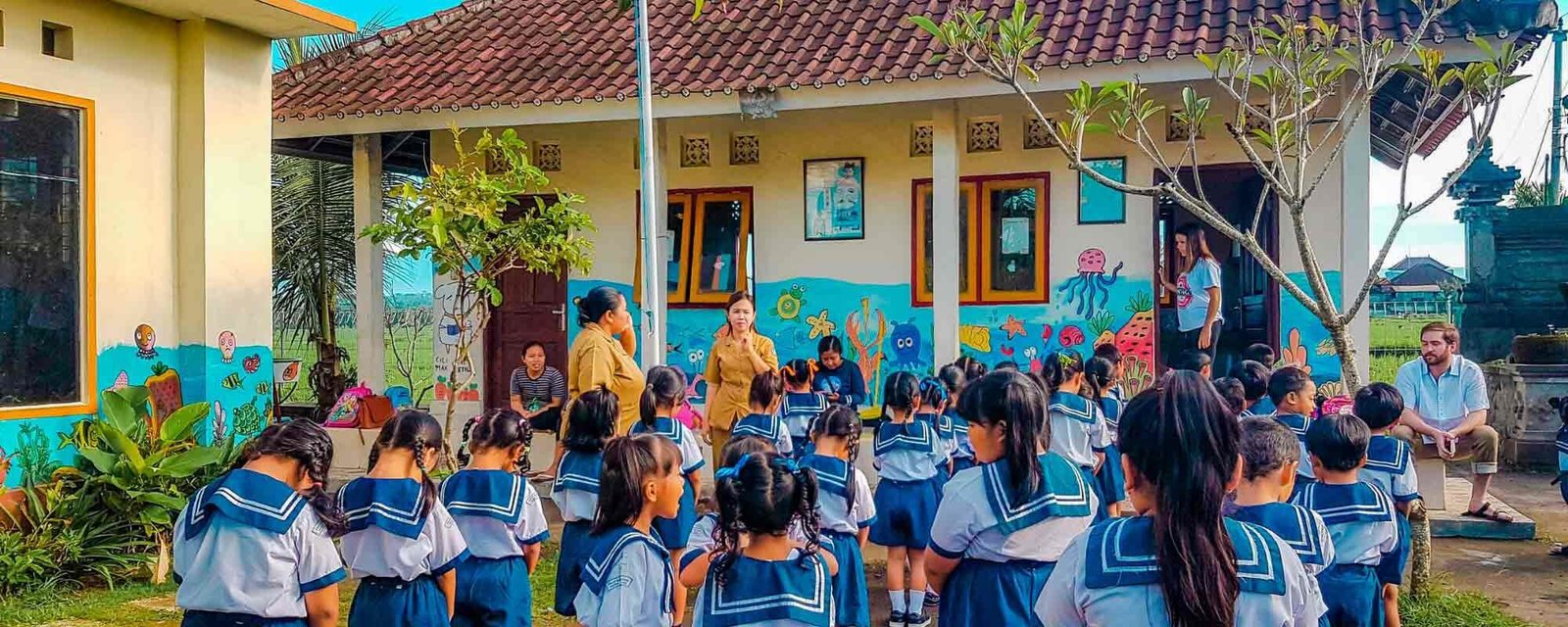
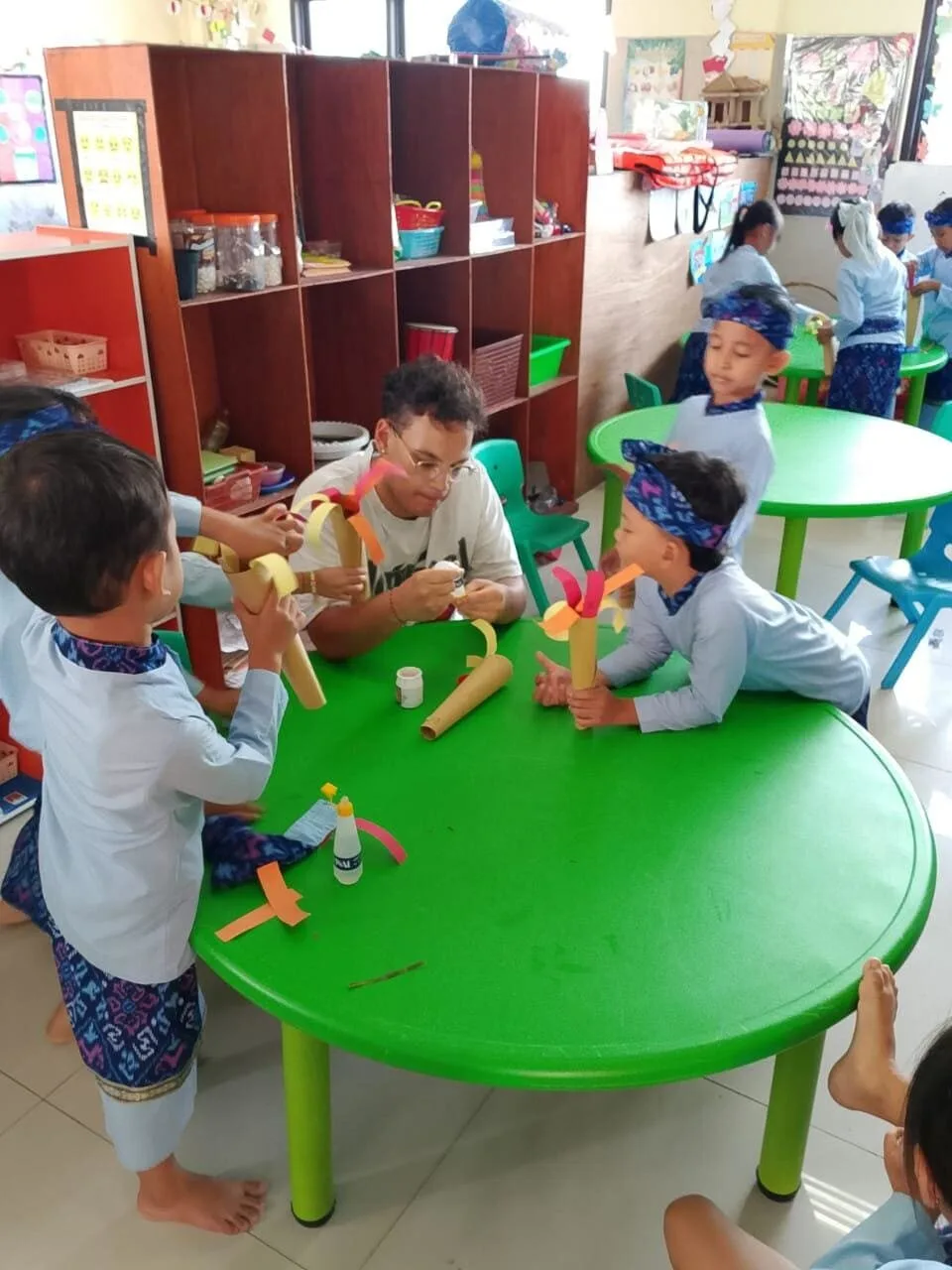
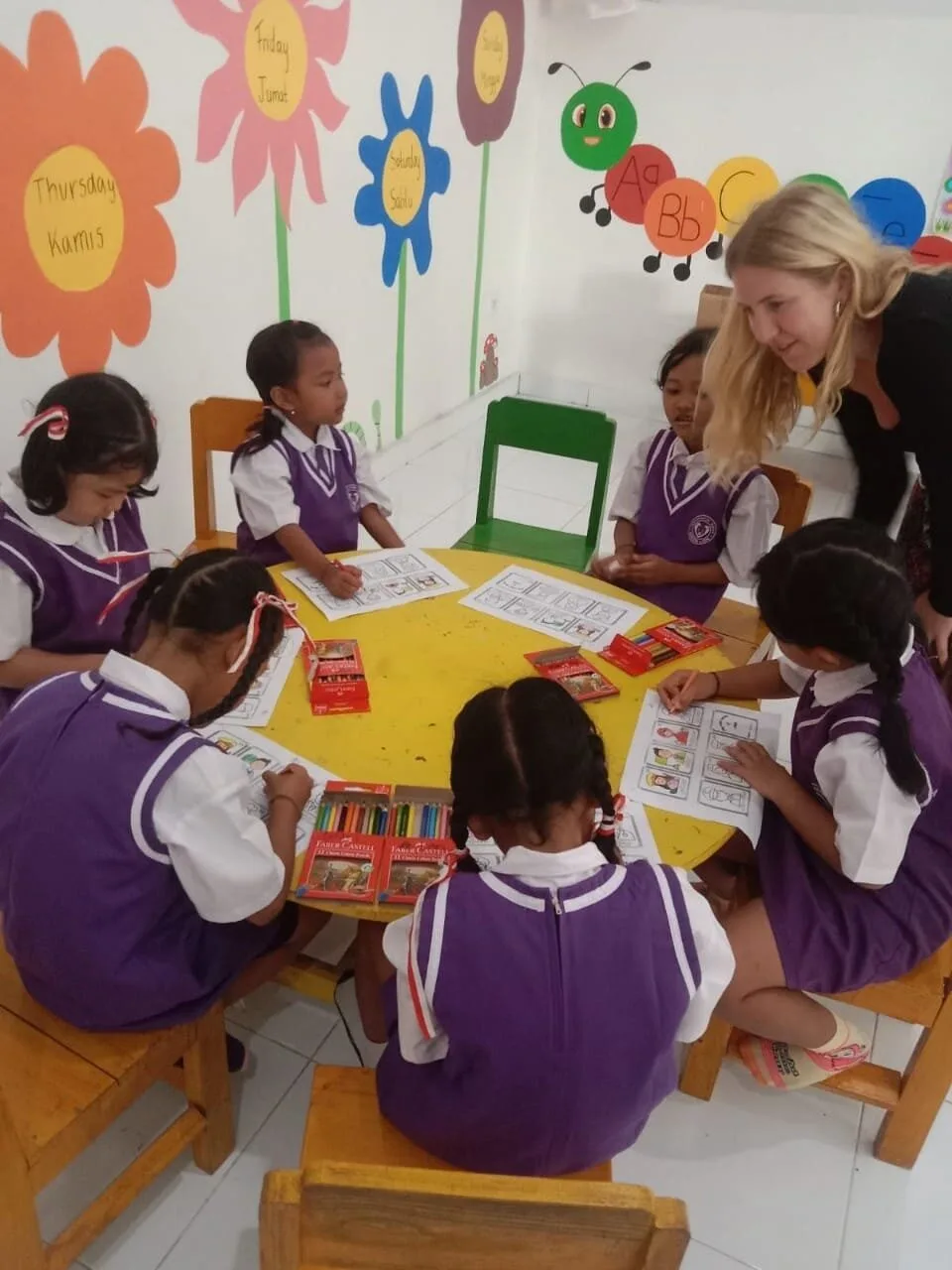
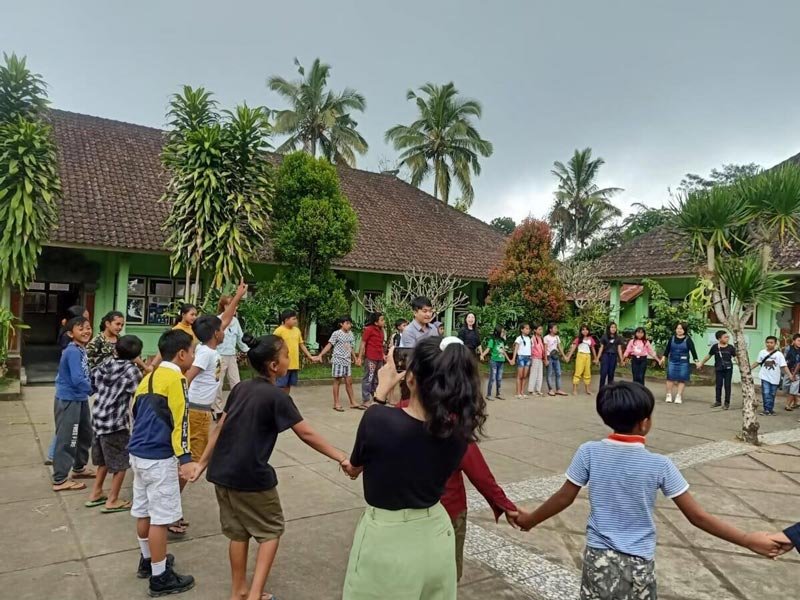
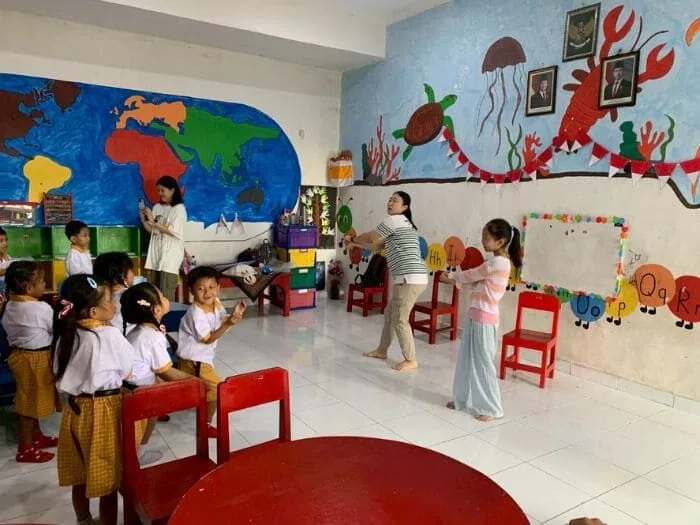
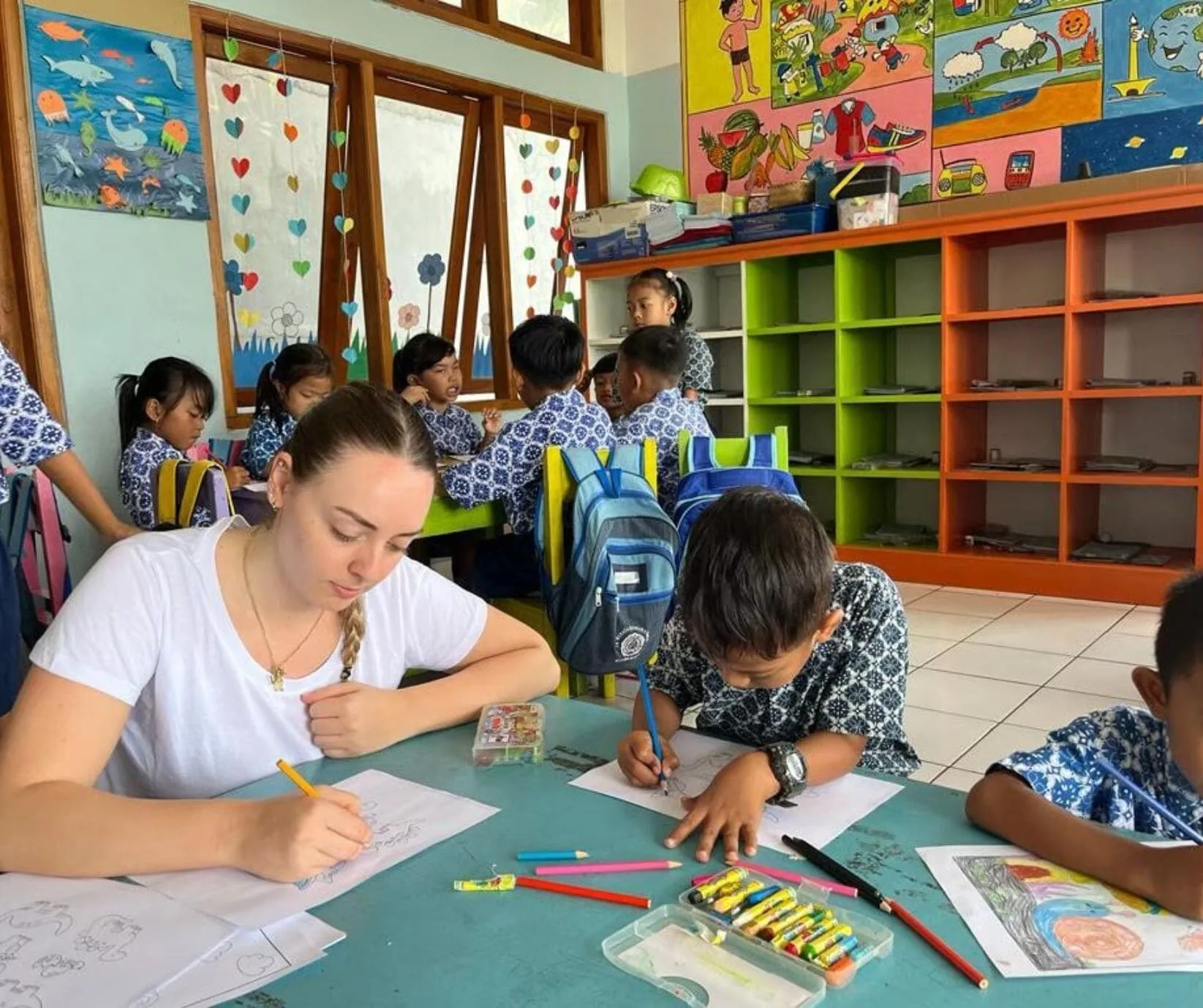
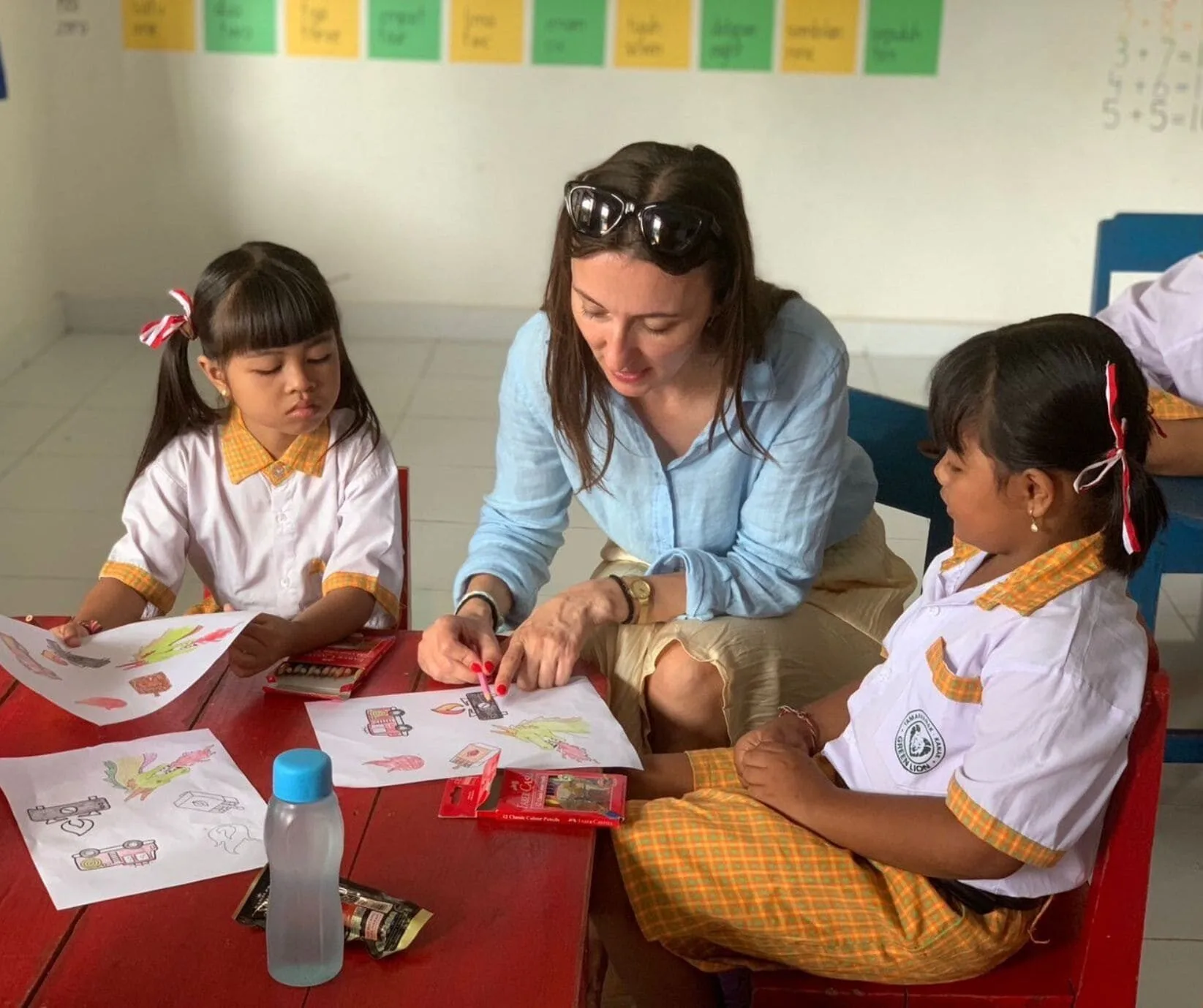
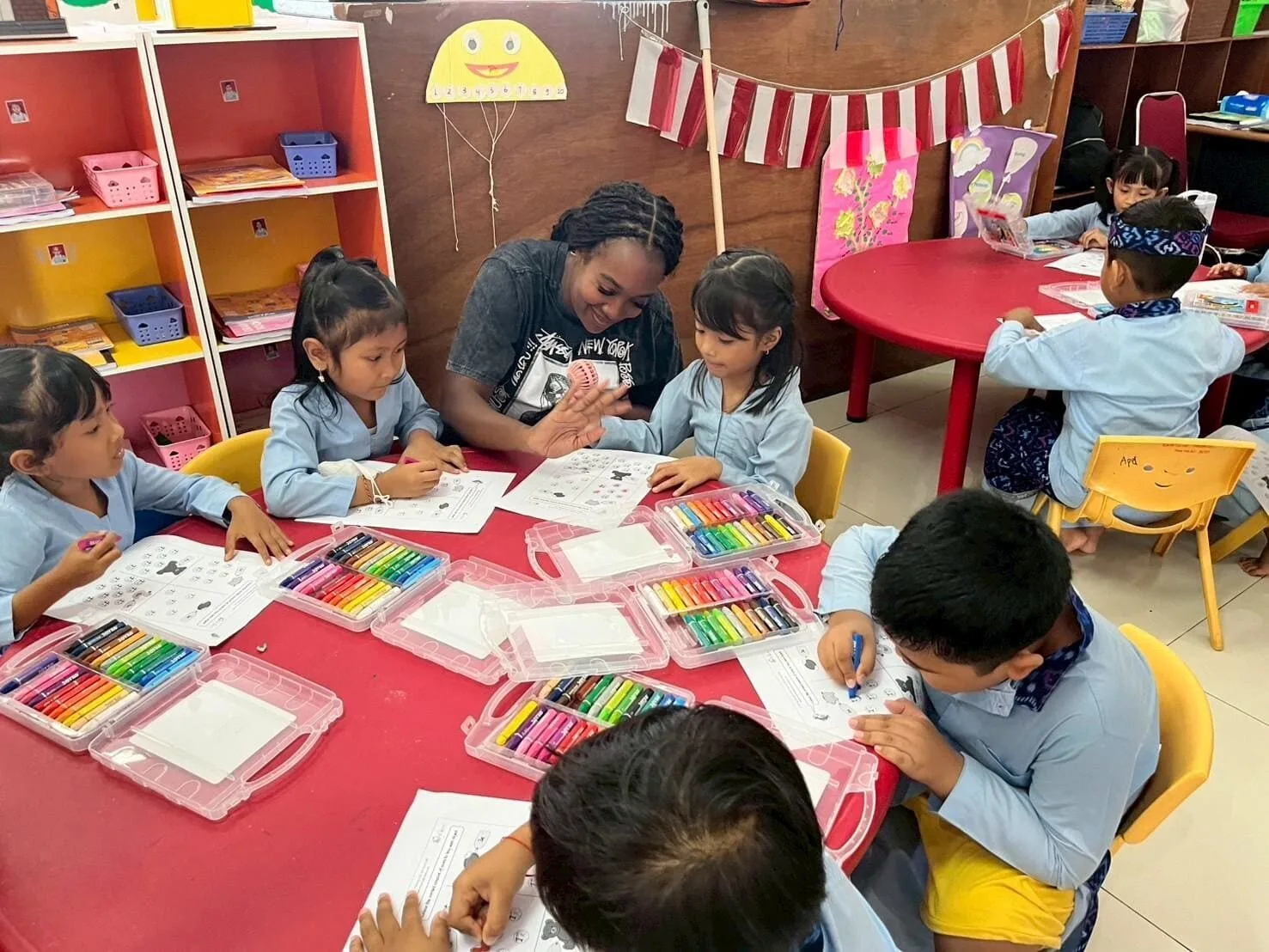
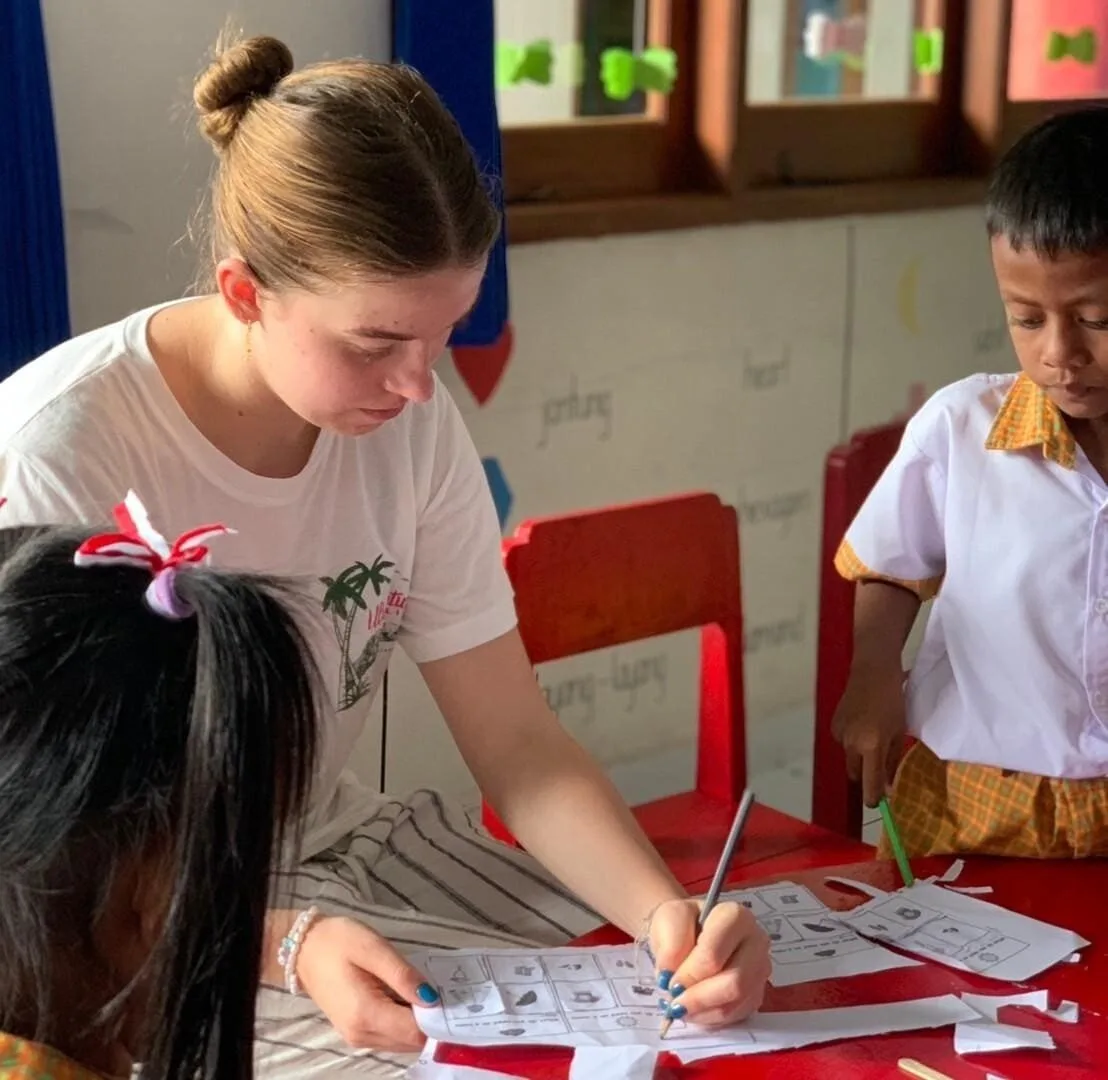
This Community project in Asia is implemented in 15 schools in Bali and in Lombok, where children are at the beginning of their educational journey and have the opportunity to learn English from a young age. The teaching approach is open and flexible. By encouraging children to attend school and teaching them a few very simple English phrases, you may help spark a lifelong habit of learning.
When joining the project, you can choose whether to participate in the kindergarten program (ages 3-6) or the primary school program (ages 7-12). If your level of English is low, it is recommended to choose the projects with younger children, as they involve more playful activities rather than theoretical lessons.
Kindergartens are open only from 8 AM to 10 AM, while schools operate in late mornings and early afternoons. It is possible to choose only one of the two programs or combine them: two hours in the morning in kindergartens and three hours in the afternoon in primary schools. This combination allows you to participate in the project for 5 to 6 hours per day.
This project is available for families. Our advisors will provide personalized recommendations based on your children’s ages, the destination, and the type of mission.
Arrivals are every Sunday
Duration during the week | Budget total mission |
|---|---|
2 weeks | 1050 € |
3 weeks | 1340 € |
4 weeks | 1670 € |
5 weeks | 2050 € |
6 weeks | 2330 € |
8 weeks | 3040 € |
10 weeks | 3800 € |
12 weeks | 4560 € |
A 200€ supplement applies to participants under 18 years old in order to cover the specific logistics and support required for minors, More information on this link Humanitarian Trips for Youth
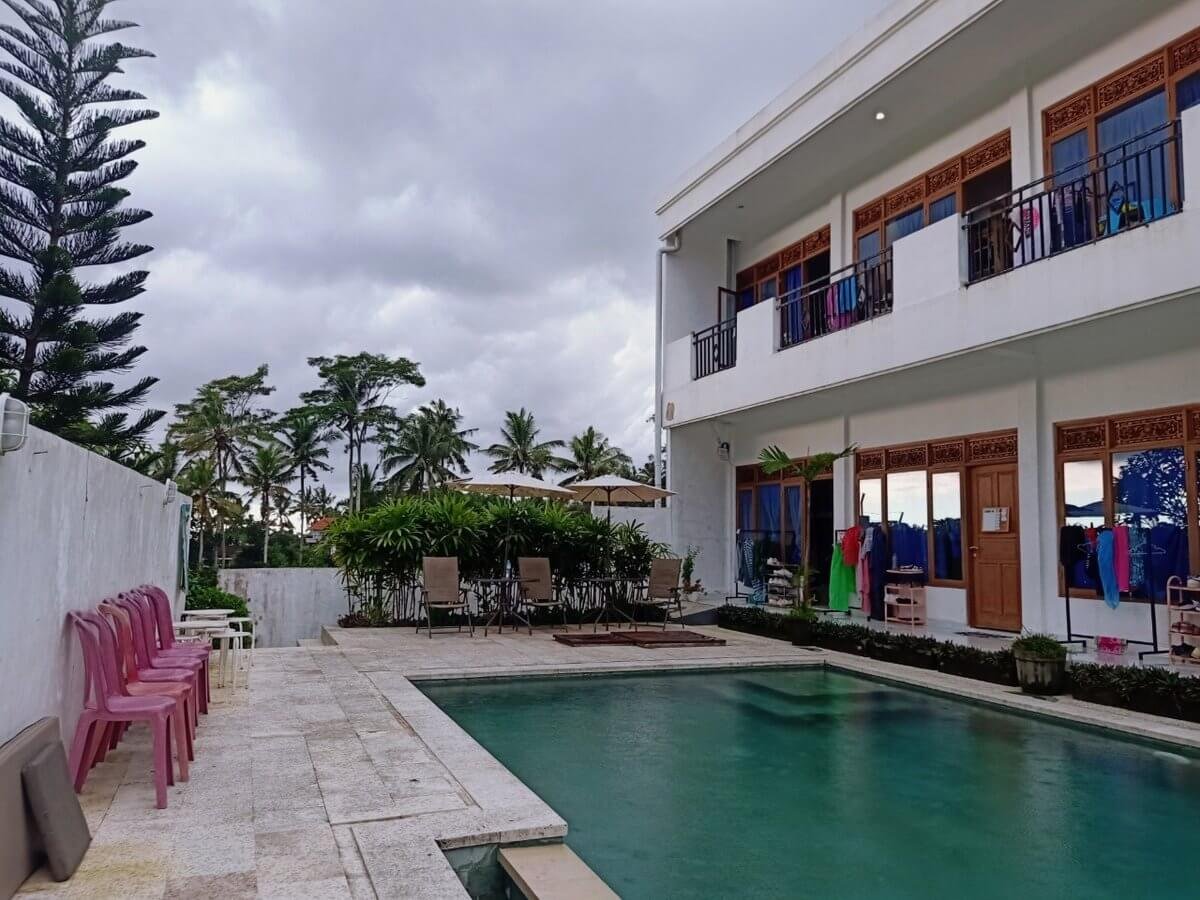
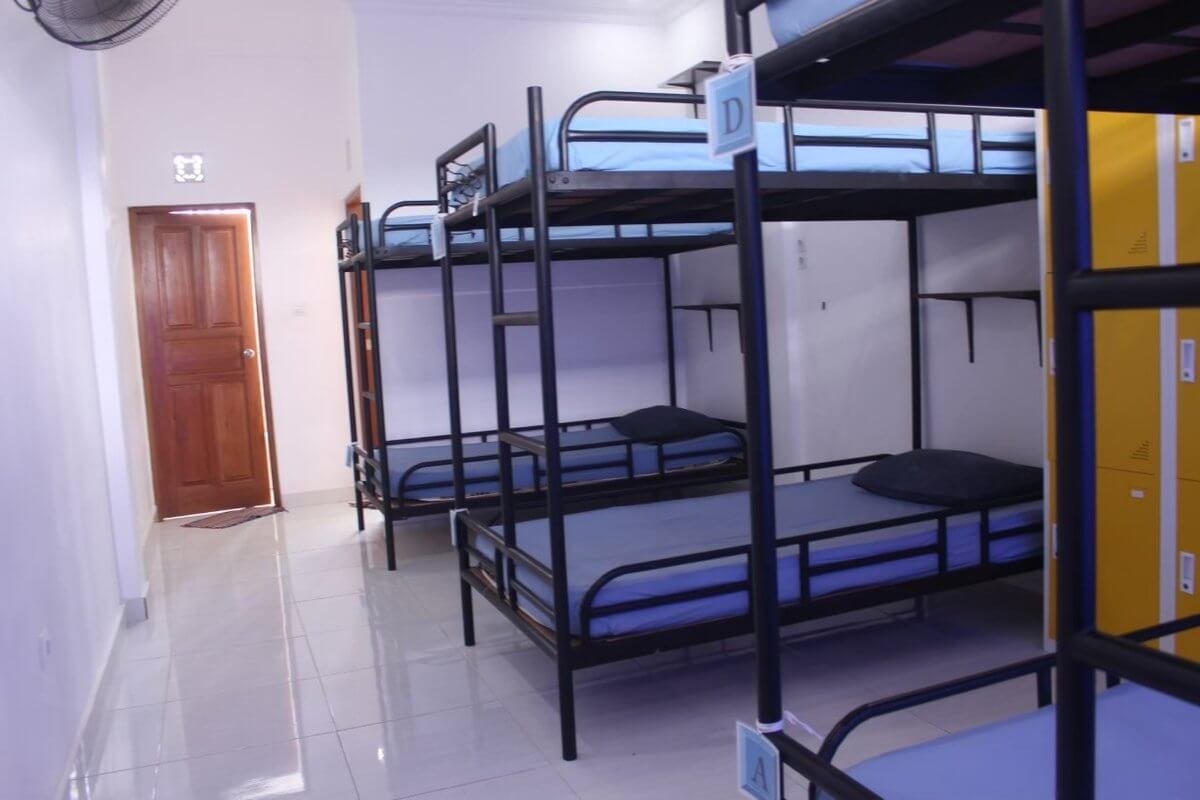
The volunteer houses are located in the village of Pejeng Kaja. Participants are accommodated in shared rooms with 4 to 8 people. The house is fully equipped: Wi-Fi in common areas, fans, air conditioning, hot water showers, and secure lockers. Local laundries and small shops are nearby (about a 5-10 minute walk), and the house is approximately a 15 to 30-minute drive from the center of Ubud.
To view our extra excursions and activities, click here.
Meals are prepared on-site by the team three times a day. Only local food is served. Indonesian cuisine is tasty and very diverse. Typical dishes include Mie Goreng (fried noodles with vegetables), Nasi Goreng (fried rice with vegetables), or Gado Gado (mixed vegetables with peanut sauce).
For those who do not eat meat, Indonesian cuisine makes extensive use of tofu and tempeh (soy-based foods). Breakfast includes pancakes, fresh fruits, toast, etc. Tea, coffee, and purified water are available at the house. We do not recommend drinking tap water.
To join the program with children in Bali:
– Intermediate English level (ability to understand instructions and communicate).
– A copy of your passport.
– B211 / C6B visa (agency contact provided by our advisors).
For all international projects, Realstep requires participants to take out travel insurance covering accidents, illness, and repatriation, as well as civil liability for professional activities abroad.
For complete protection while studying or interning abroad, you can take out Cap Student insurance online by following this link Student insurance abroad | Chapka Assurances, which will give you a 5% discount.
If you take out another insurance policy, we will ask you to send us a copy of your certificate in English.
Achieve the language level required for your international project with tailored support. The Clic-campus method Free Packers X Clic Campus foreign language training courses combines videoconference lessons and an innovative e-learning platform, offering complete flexibility from the comfort of your own home.
Our projects are selected to ensure safety. Families benefit from a reassuring environment and supervised activities. The days are designed to include both children and adults, with a flexible pace and shared moments of discovery.
Yes! For families who want to travel together, we offer programs specifically designed to welcome children from 4, 10, or 15 years old, depending on the project. Our program pages indicate whether they are family-friendly, or you can contact our team to learn more.
You’ll stay together in accommodation with private rooms, in shared houses, or in comfortable local hostels.