Madagascar, Nosy Be
Mangrove conservation in Madagascar
In Nosy Be, Madagascar, plant mangrove seedlings, maintain nurseries, collect field data and raise awareness in the local community.
- Where
- Nosy Be, Madagascar
- Length
- From 2 to 12 weeks
- Minimum age
- 18 years old
- Language
- English basic
- Departures
- Every Sunday
from €890 for 2 weeks
Check availabilityFree and with no commitment: the team calls you back with availability. Talk to the team
€300 deposit today, place confirmed within 48 hours, balance before departure.
How does it work?
- Today€300 deposit per participant, deducted from the price
- Within 48 hoursThe team confirms your place, or refunds you in full
- The balance12 weeks before departure, or on confirmation if you leave sooner


 Secure payment by Stripe
Key questions answered
- How old do I need to be?
- The programme is open to volunteers aged 18 and over.
- How long can I go for?
- From 2 to 12 weeks. Departures: every Sunday.
- How much does it cost?
- From €890 for 2 weeks.
- What will I do there?
- As a volunteer, you will work in an inclusive team environment.
- What is included in the price?
- Airport transfer on the day of arrival Fascene Airport (NOS), accommodation in shared dorms, 24/7 assistance, donation to the project, meals included, follow-up throughout the stay, …
- Do I need to speak another language?
- Required level: English basic.
The project
Join our mangrove conservation project in Nosy Be to protect a vital ecosystem and inspire lasting change!
Our “Family” projects are suitable for children from the age of 4. Our advisors will provide personalized recommendations based on your child’s age, the destination, and the type of mission.
Project description
The mangrove conservation project in Nosy Be offers participants the opportunity to contribute to the preservation and protection of mangrove forests.
The initiative focuses on restoring and safeguarding mangrove ecosystems by providing training on mangrove ecology, collecting data, and participating in nursery management and tree planting efforts.
After an orientation session, participants will engage in field activities, including data collection and mangrove tree planting. They will also be involved in a community awareness programme to highlight the importance of mangroves.
Why the project exists
- Raise awareness among local communities and stakeholders about the importance of mangrove ecosystems.
- Involve participants in various aspects of mangrove conservation and restoration, including data collection, nursery management, and tree planting.
- Collect scientific data on mangrove ecosystems to inform conservation and management decisions.
- Establish nurseries to grow and replant mangrove trees in degraded areas.
- Empower local communities to manage mangrove ecosystems sustainably.
A project we follow
Projects chosen with care and followed through regular visits on site.
Your role
As a volunteer, you will work in an inclusive team environment.
Your main tasks will include:
- Planting young mangrove seedlings.
- Maintaining nurseries and planting trees on-site.
- Collecting data in the field.
- Identifying species present in the mangrove channels.
- Developing materials for awareness and education programmes, such as posters, presentations, and videos.
- Engaging with the local community and participating in outreach activities, including visits to the local community center.
All activities are supported by an expert and planned according to the project’s needs.
Accommodation and meals
The house is located in the suburbs of Hell-Ville, in Nosy Be. It has a spacious dining room, two lounge areas (ground floor and first floor) where you can hang out with fellow participants. A large balcony is also available for you to relax on, especially after long hours of project activities.
Furthermore, there is a refrigerator which you are welcome to use to store your personal food and beverages.
All the meals served inside the accommodation are homestyle, vegetarian and you can expect that they will be a mix of Western and Malagasy food, consisting mainly of vegetarian dishes including rice and vegetables. You can also use the kitchen facilities to cook for yourself or eat out at any of the local restaurants at your own expense.
If you are a picky eater, have allergies or dietary restrictions, or if you think that you will not be satisfied with the local dishes provided, you might want to consider supplementing our menu with your own western-type foods and snacks that are more to your liking.
Meals
The meal plan includes three meals a day during the week and two a day at weekends. Meals served at the house are family-style and vegetarian, with a combination of Western and Malagasy dishes, mainly based on rice and vegetables. The kitchen is also available to those who wish to cook, and it is possible to eat at local restaurants at your own expense.
If you have specific dietary preferences, allergies or dietary restrictions, the menu can be supplemented with more suitable Western food.
Additional information
Upon arrival, you will take part in an orientation day to familiarize yourself with the environment and local culture.
Your programme will continue as usual from Tuesday and throughout the rest of the week.
You will work with coordinators who speak English and French, and you will share your daily life with volunteers from around the world.
Budget
How long are you going for?
This programme is available all year. Arrival every Sunday.
What is included
- Airport transfer on the day of arrival Fascene Airport (NOS)
- Accommodation in shared dorms
- 24/7 assistance
- Donation to the project
- Meals included
- Follow-up throughout the stay
- Orientation on arrival
Not included
- Travel insurance
- Flight
- Vaccines
- Return to the airport
Where your money goes
Donations are reinvested in full and directly into the local associations. How the costs break down
See the budget week by week
| Length | Total programme budget |
|---|

Responsible travel by Freepackers
Why not take your time?
Extend your trip in Madagascar
No volunteering here: a tour with local guides, at your own pace. The team arranges it with your stay, in the same enquiry.
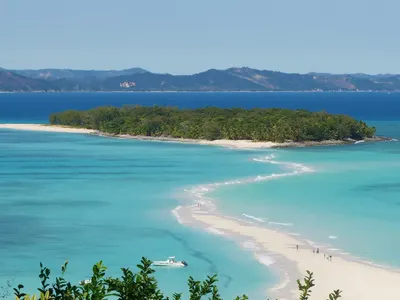
You can add it when you fill in your enquiry.
Getting ready to leave
Your application
An up-to-date CV and a cover letter describing your background and what brings you here.
Conditions to take part
- 18+ to travel alone; in a family, children take part accompanied by their parents
- Vaccinations: Polio, hepatitis A, diphtheria/tetanus, typhoid, malaria, hepatitis B, and tuberculosis are recommended but not mandatory.
- Yellow fever vaccination is a mandatory requirement for all participants arriving in Madagascar from countries affected by yellow fever.
Insurance
For any project abroad, Freepackers requires travel insurance covering accidents, illness, repatriation and third-party liability. With Chapka Cap Student, you get 5% off.
Online language lessons
With Clic Campus: video lessons and an e-learning platform, from home.
Questions
What kind of accommodation is provided for a family?
You stay together, in private rooms, shared houses or comfortable local guesthouses.
Is it a safe trip for children?
Our projects are selected with safety in mind. Families get a reassuring setting and supervised activities. The days are designed to include young and old alike, with a flexible pace and time to discover things together.
Can you join a project as a family?
Yes. For families who want to travel together, we offer programmes designed to welcome children from the age of 4, 10 or 15 depending on the project. Our programme pages say whether they are open to families; otherwise, contact our team to find out more.
Another question? Ask the team, and someone who knows the project will answer.
In Madagascar too
All our programmes in Madagascar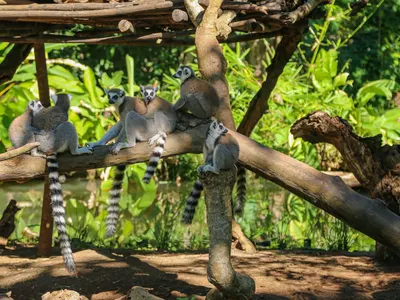
Madagascar, Nosy Be5(2)
Conservation of lemurs in Madagascar
- Duration
- 2 to 12 weeks
- Age
- From 18 years old
from €1,240 for 2 weeks
Madagascar, Nosy Be5(2)
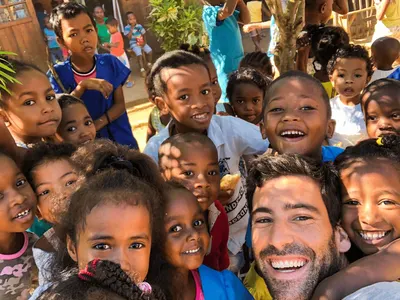
Social missions in Madagascar
- Duration
- 2 to 12 weeks
- Age
- From 18 years old
from €890 for 2 weeks
