Kenya, Nakuru
Summer camp: educational project and giraffe conservation in Kenya
For 15 to 17-year-olds, this summer camp in Kenya combines volunteering in a wildlife reserve, meeting the Maasai and supervised activities to discover the country.
- Where
- Nakuru, Kenya
- Length
- 2 weeks
- Minimum age
- 15 years old
- Language
- English intermediate
- Departures
- Next departure on 13 June 2027
from €1,400 for 2 weeks
Check availabilityTalk to the teamNo commitment. Anaëlle, Amélie or Maëlia will reply.
The project
Open to young people aged 15 to 17, this summer camp in Kenya gives you the opportunity to contribute to a volunteer project in a wildlife reserve! During free time, the programme also offers supervised activities to discover the country and its culture.
The Volunteer Project
Join a team committed to protecting wildlife in a regional nature reserve.
During this project, participants will work alongside the local team and take part in:
- Monitoring animals
- Helping maintain the reserve’s grazing areas
- Repairing fences
- Contributing to the restoration of this valuable ecosystem’s natural balance
- You will also have the chance to meet the Maasai and learn about their traditions (songs, dances)
This is a unique opportunity to raise awareness about environmental issues, wildlife protection, and cultural openness.
Constant supervision is provided and a group leader is present to meet the participants’ needs at all times.
It’s also the perfect opportunity to improve your English through interactions with local communities and other programme participants.
A project we follow
Projects chosen with care and followed through regular visits on site.
Accommodation and meals
You will stay in shared rooms with the other minors participating in the programme.
A dedicated coordinator will be available on-site 24/7 for all the projects.
Meals
All meals (breakfast, lunch, and dinner) are provided.
Arrival and transfers
Upon arrival, a project coordinator will be waiting for you with a sign bearing your name, and will accompany you to your accommodation where you will be greeted by the rest of the team and meet all the participants in the programme. You will also have the chance to take an introductory Swahili course (the official language of Kenya).
On the second day, you will have an introduction to Maasai culture to familiarize yourself with the local culture.
Free time and activities
During the trip, participants will be able to take part in activities with the rest of the group during evenings and weekends.
Here are some of the activities generally offered:
- Excursion to Thomson’s Falls
- Visit to Nakuru National Park
- Swahili language classes
- Safari and project in the nature reserve
- Traditional cooking classes
- Boat ride on Lake Naivasha
Budget
Length of stay
This programme is available on the following dates: - From June 13 to June 26, 2027 - From July 12 to July 25, 2027
What is included
- All listed projects and activities
- Full-board accommodation in shared rooms (all meals are included)
- Round-trip airport transfer
- Orientation and training upon arrival
- Local transport for all projects and activities
- Dedicated group coordinator for all projects and activities
- 24/7 local emergency assistance
- Donation to the project
Not included
- Flight tickets
- Travel and repatriation insurance
- Personal expenses
- Medical insurance
Where your money goes
Donations are reinvested in full and directly into the local associations. How the costs break down
See the budget week by week
| Length | Total programme budget |
|---|
Getting ready to leave
Your application
An up-to-date CV and a cover letter describing your background and what brings you here.
Conditions to take part
- Travel and repatriation insurance
- Parental authorization to leave the country (Cerfa form)
- Parental consent
- Passport valid for at least 6 months after return
Insurance
For any project abroad, Freepackers requires travel insurance covering accidents, illness, repatriation and third-party liability. With Chapka Cap Student, you get 5% off.
Online language lessons
With Clic Campus: video lessons and an e-learning platform, from home.
Questions
What kit do you need for the summer camp in Kenya?
- Gardening gloves for the giraffe project
- A cap or a hat
- Sunglasses
What are the vaccination requirements for a summer camp?
Check with your doctor before you leave, and with a travel health service such as the Institut Pasteur: pasteur.fr/fr/centre-medical/preparer-son-voyage/
What are the benefits of a school work placement abroad?
A work placement abroad brings a great deal, personally and professionally. It gives you international experience, builds your language skills, immerses you in a new culture and lets you make a real contribution to projects with a social impact. These experiences are also worth highlighting in your studies, your career and your personal life.
Can you do your school work placement in another country?
Of course. Whatever course you are on, you can take part.
Our placements abroad cover a wide range of fields with a positive impact on local communities. You can choose to join:
- Education: supporting teaching in schools, running educational workshops for children or taking part in awareness campaigns on crucial subjects such as the environment.
What is a youth work camp?
A youth work camp is a stay where teenagers take part in solidarity projects, often centred on building, renovation or protecting the environment. Run in several countries, these camps let young people help improve local living conditions while gaining valuable practical and personal skills.
How do you sign up for a summer camp abroad?
Signing up for a summer camp abroad usually takes several steps:
- Choose a programme that suits the teenager's interests and language level.
- Check the conditions for joining: age, language level, paperwork required.
What does a week at a summer camp look like?
Most youth camps follow a similar pattern:
- Day one: on arrival, participants are welcomed by the staff, introduced to the others and shown around, so they feel at ease.
- Monday to Friday:
What is a summer camp?
A summer camp is an immersive experience that lets teenagers and young adults take part in educational, sporting and cultural activities over the summer holidays.
These programmes offer a safe setting in which to discover new cultures and activities, improve language skills (English or Spanish) and meet people from all kinds of backgrounds. They carry a strong educational purpose: teenagers learn a great deal about the culture and the language of the country they visit.
Another question? Ask the team, and someone who knows the project will answer.
In Kenya too
All our programmes in Kenya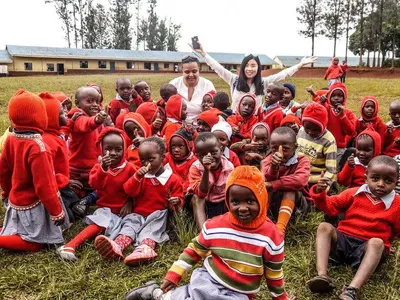
Kenya5(2)
Education project in Kenya
- Duration
- 2 to 12 weeks
- Age
- From 15 years old
from €1,050 for 2 weeks
Kenya5(2)
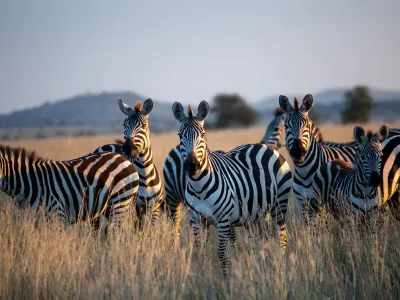
Protecting wildlife in Kenya
- Duration
- 2 to 12 weeks
- Age
- From 15 years old
from €1,500 for 2 weeks
Kenya, Nakuru
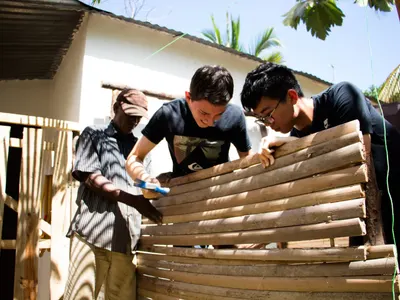
Construction project in Kenya
- Duration
- 2 to 12 weeks
- Age
- From 15 years old
from €1,050 for 2 weeks
