New Zealand, Timaru5/5 (2 reviews)
Rugby course in New Zealand
Attend a New Zealand high school in Timaru as an international student and play for the school rugby club, with two training sessions a week and weekend matches.
- Where
- Timaru, New Zealand
- Length
- From 6 to 10 weeks
- Minimum age
- 15 years old
- Language
- English basic
from €4,590 for 6 weeks
Check availabilityTalk to the teamNo commitment. Anaëlle, Amélie or Maëlia will reply.
The project
At Timaru High School on the South Island, students attend classes immersed in a New Zealand high school. At the same time, they will join the school rugby club for two training sessions per week with matches on weekends. This programme is designed for teenagers who already play rugby.
This programme is part of the various youth trips offered by Freepackers.
Where do our international students come from?
International students participating in the high school and rugby programme in New Zealand primarily come from Thailand, Hong Kong, South Korea, Japan, Germany, India, the Pacific Islands, and China.
A project we follow
Projects chosen with care and followed through regular visits on site.
Accommodation and meals
A homestay provides a supportive environment, making it easier for students to integrate into the New Zealand way of life.
On-campus residence is subject to availability at our Thomas House facility, reserved for participants in the youth abroad mission.
Free time and activities
Outside of the school routine, many activities are organized on weekends, such as skiing trips, local excursions, summer camps, gatherings for all international students in the region, and more. The school’s rugby club also organizes outings to watch national and international matches. If you are there during the season, you may have the chance to meet the All Blacks!
Academic Programme
International students follow the academic courses designed for local students with some adaptations for international students. The school’s general academic programme is presented each year by the teaching team. Under the guidance of the international coordinator and a qualified teacher, students take a full English as a Second Language course while being integrated into regular classes according to their level.
English Course Programme
In addition to full-time instruction for international students, the school also offers a comprehensive English programme and an introduction to the New Zealand way of life for small groups of international students as part of short programmes. Students attend classes from 8:40 am to 12:35 pm with a 20-minute break from 10:40 am to 11:00 am. Formal language study will be part of the learning, focusing on formal reading and writing, grammar, and vocabulary. Informal conversation practice will also be offered based on the formal lessons, emphasizing listening and speaking skills.
Students will also have the opportunity to take courses in other subjects, including mathematics, science, social sciences, economics, art, food technology, horticulture, computer science, music, workshop technology, and physical education. Students will have the chance to assess their language proficiency at the end of the short programme. They will receive a certificate upon completion of the programme, along with an individual progress report.
Our Partner School
International students are warmly welcomed into the community of our partner school in Timaru and appreciate this opportunity to interact with other cultures. The goal is to provide the most suitable education for international students, with the academic programme supported by sports, cultural, and social activities. Students are prepared for future tertiary and professional opportunities, with an enriching learning environment at home and at school.
What the school offers international students
- Academic Excellence. Superior quality teaching for students of all levels.
- Traditional and progressive programmes.
- Importance placed on examination results.
- Sporting and cultural excellence.
Requirements
- Ages 15-18
- NZeTA (New Zealand Electronic Travel Authority)
- Parental consent for minors
- Intermediate level of English (A2 / B1)
- Rugby experience
You can take English lessons before the programme to strengthen your language skills! Contact us to find out more.
Budget
How long are you going for?
Short programmes (4-8 weeks) are available year-round. Trimesters (10 weeks), semesters and full years (48 weeks) have specific start dates. Please contact us to get the full list of start dates.
What is included
- Accommodation in a single room
- All meals
- School uniform
- Airport transfers (Auckland or Christchurch)
- Social and sports activities
- Local Rugby Club Membership
- Health insurance offered by the school
Not included
- Flight tickets
- Travel and repatriation insurance
- Visa
Where your money goes
Donations are reinvested in full and directly into the local associations. How the costs break down
See the budget week by week
| Length | Total programme budget |
|---|
Getting ready to leave
Your application
An up-to-date CV and a cover letter describing your background and what brings you here.
Insurance
For any project abroad, Freepackers requires travel insurance covering accidents, illness, repatriation and third-party liability. With Chapka Cap Student, you get 5% off.
Online language lessons
With Clic Campus: video lessons and an e-learning platform, from home.
Questions
What are the vaccination requirements for a summer camp?
Check with your doctor before you leave, and with a travel health service such as the Institut Pasteur: pasteur.fr/fr/centre-medical/preparer-son-voyage/
What are the benefits of a school work placement abroad?
A work placement abroad brings a great deal, personally and professionally. It gives you international experience, builds your language skills, immerses you in a new culture and lets you make a real contribution to projects with a social impact. These experiences are also worth highlighting in your studies, your career and your personal life.
Can you do your school work placement in another country?
Of course. Whatever course you are on, you can take part.
Our placements abroad cover a wide range of fields with a positive impact on local communities. You can choose to join:
- Education: supporting teaching in schools, running educational workshops for children or taking part in awareness campaigns on crucial subjects such as the environment.
What is a youth work camp?
A youth work camp is a stay where teenagers take part in solidarity projects, often centred on building, renovation or protecting the environment. Run in several countries, these camps let young people help improve local living conditions while gaining valuable practical and personal skills.
How do you sign up for a summer camp abroad?
Signing up for a summer camp abroad usually takes several steps:
- Choose a programme that suits the teenager's interests and language level.
- Check the conditions for joining: age, language level, paperwork required.
What does a week at a summer camp look like?
Most youth camps follow a similar pattern:
- Day one: on arrival, participants are welcomed by the staff, introduced to the others and shown around, so they feel at ease.
- Monday to Friday:
What is a summer camp?
A summer camp is an immersive experience that lets teenagers and young adults take part in educational, sporting and cultural activities over the summer holidays.
These programmes offer a safe setting in which to discover new cultures and activities, improve language skills (English or Spanish) and meet people from all kinds of backgrounds. They carry a strong educational purpose: teenagers learn a great deal about the culture and the language of the country they visit.
Another question? Ask the team, and someone who knows the project will answer.
In New Zealand too
All our programmes in New Zealand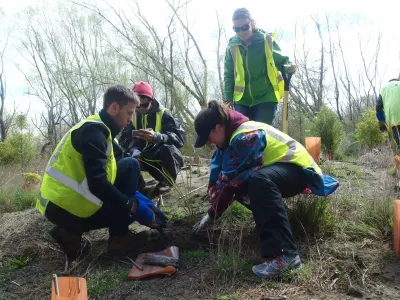
New Zealand5(2)
Conservation project in New Zealand
- Duration
- 2 to 8 weeks
- Age
- From 18 years old
from €1,300 for 2 weeks
New Zealand4(2)
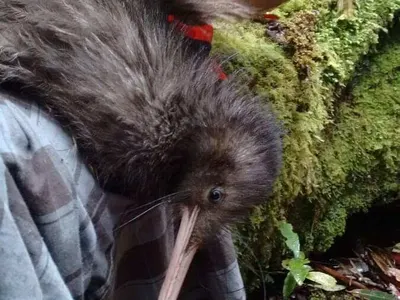
Volunteer with wildlife in New Zealand
- Duration
- 2 to 12 weeks
- Age
- From 18 years old
from €1,690 for 2 weeks
