

What is Ethical Volunteering?
Ethical Volunteering puts the needs of the community first, rather than the volunteer’s personal experience. These programs are led by a) local organizations, b) provide long-term impact, c) promote responsible leadership, d) maintain clear safety measures, policies, and pre-departure training and orientations.
What is Volontourism?
Voluntourism combines volunteering with tourism and is often promoted as a way for travelers to give back to communities while exploring new destinations. However, it has also faced criticism for potentially leading to exploitation when not carried out ethically.
In many cases, voluntourism prioritizes travel and sightseeing over meaningful impact, with participants providing short-term, often unskilled support that could otherwise be done by local workers. Additionally, some programs are criticized for focusing more on photo opportunities and personal experience than on addressing genuine community needs.
Ethical Volunteering vs. Voluntourism
Ethical Volunteering | Voluntourism | |
| Project Focus | Locally led initiatives addressing genuine community needs | Service projects often for volunteer experience |
| Impact on Community | Aims for long-term positive impact and empowerment | Can be exploitative of vulnerable populations |
| Volunteer Experience | Emphasises pre-departure training and transparent protection policies | Prioritizes travel and sightseeing for the volunteer |
Ethical Volunteering Abroad – How to Volunteer Abroad Ethically?
1. Prioritize the community’s needs
- Choose programs that focus on supporting local goals, not just creating experiences for volunteers
2. Look for locally led initiatives
- Programs, like Freepackers & RealStep, are in constant communication with partnered NGOs to ensure they are aligned with what the community truly needs
3. Seek long-term impact
- Ethical volunteering focuses on sustainable change rather than quick fixes
4. Check safety and transparency
- Ethical programs provide clear policies, pre-departure training/guides, and cost transparency to protect both volunteers and the community.
5. Respect cultural norms
- Learn about local customs, language basics, and community practices to ensure your presence is respectful and positive.
6. Reflect and share responsibly
- Focus on the people and impact, share your story, but it is not about selfies or bragging rights. Your story should uplift the community and bring more awareness.
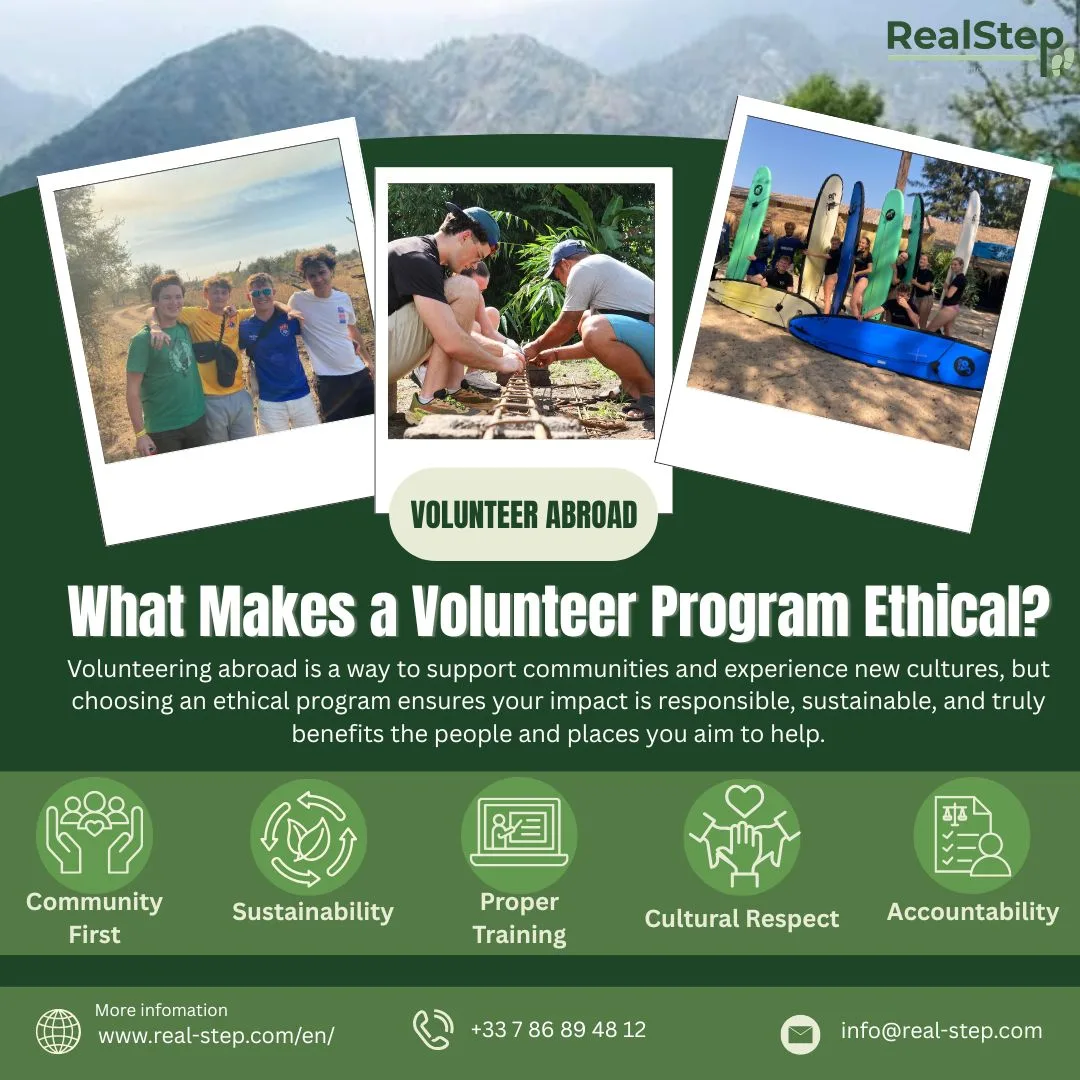
For more information on Voluntourism, visit our posts here
Ethical Volunteering Organizations
GVI (Global Vision International)
Focuses on high-quality, safe, and ethical wildlife conservation and community projects
Impactrip
A B Corp-certified social enterprise that connects volunteers with local non-profit and community organizations.
Green Lion
A travel company that blends cultural immersion, adventure, and impactful travel experiences.
Freepackers and RealStep collaborate with all of these organizations, trusted NGOs, connecting volunteers with ethical programs that prioritize community impact and sustainability.
How Can I Verify if a Volunteering Organization Operates Ethically?
Reviews and references
Search for testimonials and feedback from past volunteers, local community partners, or third-party reviewers.
Transparency
Ethical organizations provide clear information on:
- Program goals and outcomes
- Volunteer responsibilities
- Safety measures, including background checks and insurance
Alignment with recognized standards
Look for adherence to international guidelines, like the UN Sustainable Development Goals (SDGs)
What are the Key Indicators of a Responsible Volunteer Program?
Community Led
– Local communities drive the projects, ensuring volunteer efforts address real needs.
Long-term impact
– Initiatives focus on sustainable change, rather than short-term fixes
Wildlife Protection
– Programs prioritize ethical treatment of animals and conservation practices.
Vetted participants
– Volunteers are carefully reviewed to ensure they are qualified, responsible, and aligned with program goals.
Child protection
– Programs have strict policies to safeguard children, including background checks and training for all participants.